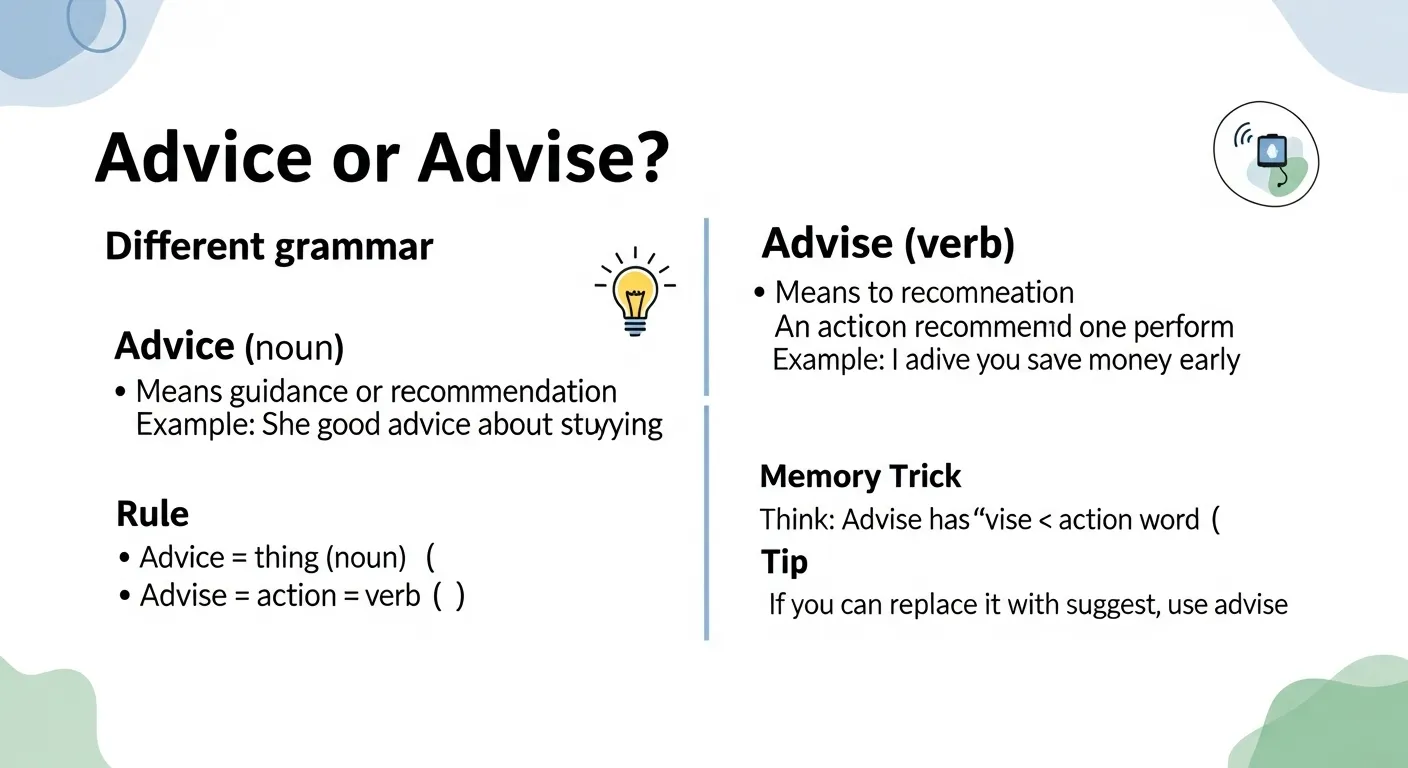
Advice is a noun meaning a suggestion or guidance, while advise is a verb meaning to give a recommendation or guidance.
I remember once writing an email where I typed “Thank you for your advise.” Something about it looked wrong, and after checking, I realized the correct word was advice. Many English learners search “advice or advise” because the words look almost identical and sound very similar in pronunciation.
They serve different roles in a sentence. Understanding this small but important grammar difference can help you write clearer and more accurate English.
Advice or Advise : Quick Answer
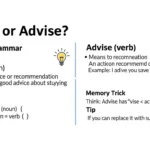
Advice = a noun that means a suggestion, recommendation, or guidance given to someone.
Advise = a verb that means to give someone a suggestion or recommendation.
Examples:
- She gave me good advice.
- The teacher advised the students to study harder.
Simple rule:
Advice → thing (noun)
Advise → action (verb)
Meaning of Advice and Advise
The main difference between advice and advise is their grammatical role.
Advice (Noun)
Advice refers to an opinion or suggestion offered to help someone decide what to do.
Examples:
- My father gave me useful advice about my career.
- She asked for advice before making the decision.
- Good advice can save you from mistakes.
Because it is a noun, advice usually appears after verbs like:
- give
- offer
- ask for
- take
Example:
- He gave me helpful advice.
Advise (Verb)
Advise means to recommend or suggest something to someone.
Examples:
- The doctor advised him to rest.
- I advise you to save money.
- The lawyer advised the client carefully.
Because advise is a verb, it shows an action.
Example:
- She advised me to wait before investing.
Origin of Advice and Advise
Both words come from the same historical root.
They originate from the Old French word “avis,” which meant opinion or judgment. This word later entered Middle English and developed into two separate forms:
- Advice (noun)
- Advise (verb)
English often creates word pairs like this where the noun and verb forms look similar but serve different grammatical functions.
Advice vs Advise Grammar Rule
The easiest way to remember the difference is by identifying the part of speech.
| Word | Part of Speech | Meaning | Example |
| Advice | Noun | Suggestion or guidance | She gave me advice. |
| Advise | Verb | To give a suggestion | She advised me to wait. |
Examples:
- He gave me excellent advice.
- I advise you to think carefully.
If the word describes something given, use advice.
If the word describes the act of giving guidance, use advise.
Advice or Advise in Pronunciation
Another helpful way to distinguish them is pronunciation.
- Advice ends with an “s” sound.
- Advise ends with a “z” sound.
Examples:
- Advice → ad-VICE (soft s sound)
- Advise → ad-VIZE (buzzing z sound)
Although the spelling difference is small, the pronunciation helps identify which word is being used.
Common Mistakes with Advice or Advise
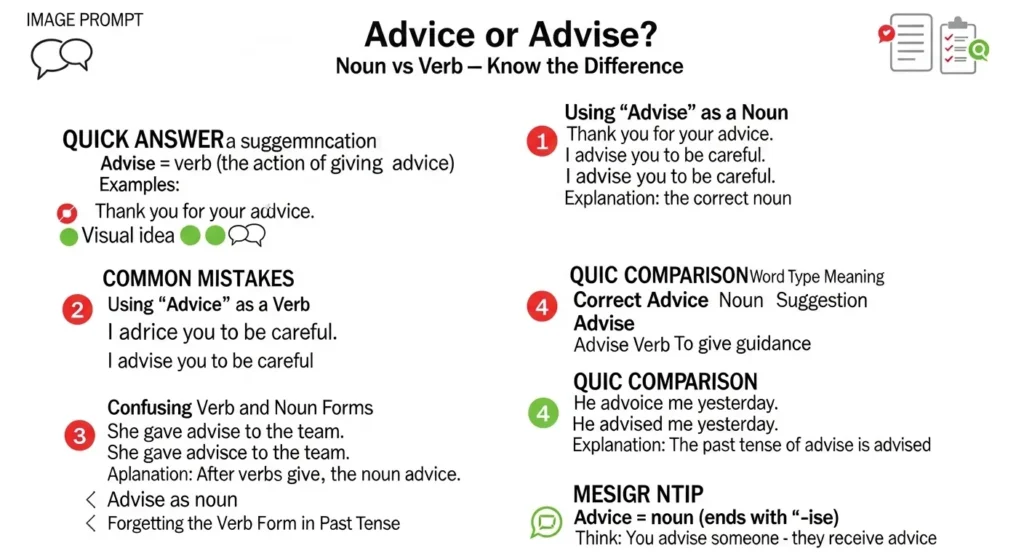
1. Using “Advise” as a Noun
❌ Thank you for your advise.
✅ Thank you for your advice.
2. Using “Advice” as a Verb
❌ I advice you to be careful.
✅ I advise you to be careful.
3. Confusing Verb and Noun Forms
❌ She gave advise to the team.
✅ She gave advice to the team.
4. Forgetting the Verb Form in Past Tense
❌ He advice me yesterday.
✅ He advised me yesterday.
Advise or Advice in Everyday Examples
In Professional Settings
- The manager gave helpful advice to the new employee.
- The consultant advised the company on strategy.
Personal Life
- My parents always give good advice.
- My friend advised me to travel more.
In Education
- The professor gave career advice to students.
- The teacher advised the class to practice daily.
In Health Situations
- The doctor gave medical advice.
- The doctor advised him to exercise regularly.
Comparison Table: Advice vs Advise
| Feature | Advice | Advise |
| Part of speech | Noun | Verb |
| Meaning | Suggestion or guidance | To give guidance |
| Example sentence | She gave advice. | She advised me. |
| Pronunciation ending | “s” sound | “z” sound |
| Function | Thing | Action |
Frequently Asked Questions
Is advice a noun or verb?
Advice is a noun.
Example:
- She gave me useful advice.
Is advise a noun or verb?
Advise is a verb.
Example:
- I advise you to stay calm.
What is the past tense of advise?
The past tense is advised.
Example:
- The teacher advised the student to work harder.
Can advice be plural?
Advice is usually uncountable, so it does not normally have a plural form.
Example:
- He gave me some good advice.
How can I remember the difference easily?
Remember:
- Advice = noun (thing)
- Advise = verb (action)
Conclusion
The difference between advice and advise comes down to their role in a sentence. Advice is a noun that refers to a suggestion or recommendation given to help someone make a decision. Advise, on the other hand, is a verb that means to give that recommendation or guidance.
Even though the two words look very similar, their grammatical functions are different. Many English learners confuse them because the spelling difference is small, but remembering that advice is a thing and advise is an action makes the distinction much easier.
Once you keep this rule in mind, choosing the correct word in writing and conversation becomes simple and natural.

I am Emily Carter, a British writer and linguistics enthusiast from London.
I specialize in studying the differences between British and American English.
I enjoy exploring how language changes across cultures and regions.
Through my writing, I aim to make English learning simple and interesting for students.