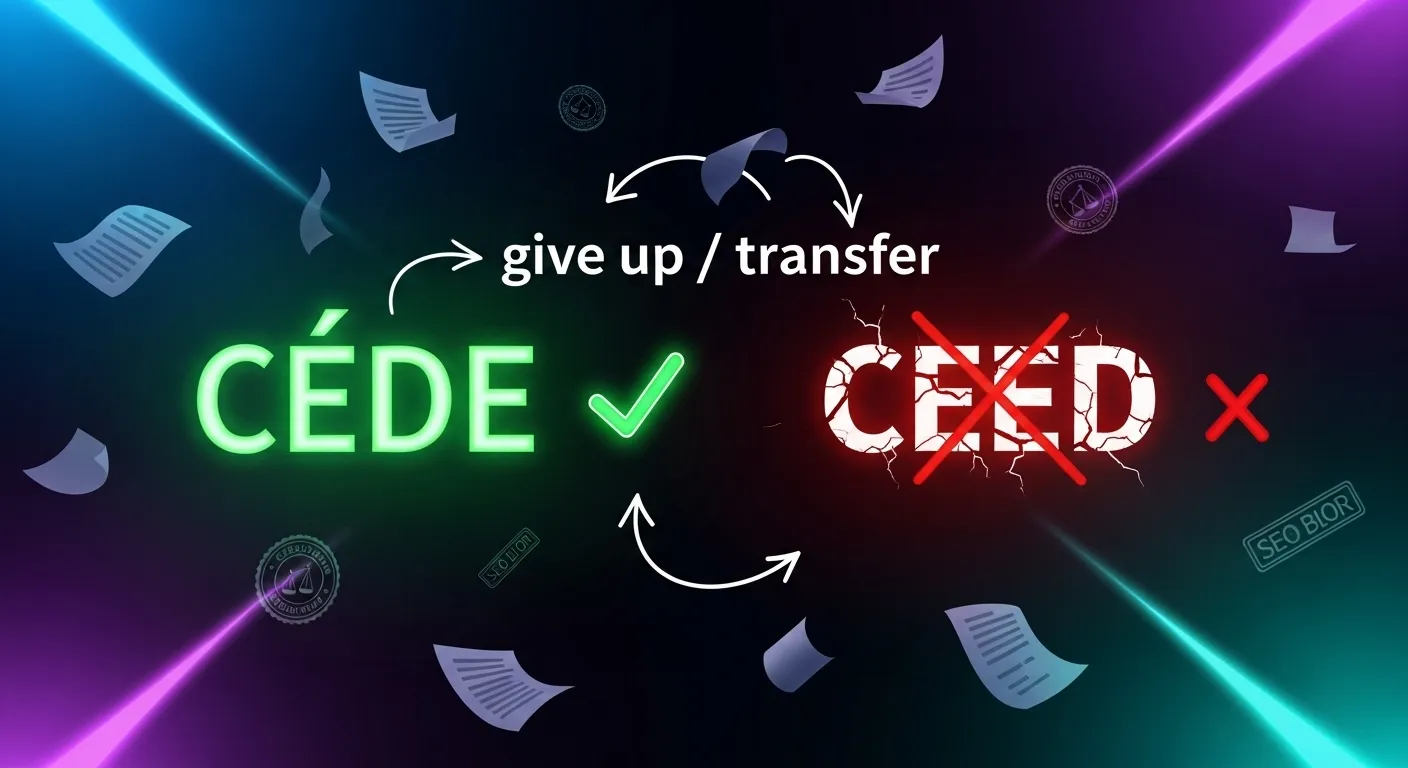
The correct word is cede and ceed is not a standard English word.
I remember pausing mid-sentence while writing a formal email and thinking, “Is it cede control or ceed control?” Spellcheck didn’t flag it clearly, and both forms looked believable at first glance. That moment sent me searching for “cede or ceed”, just like many students, professionals, and writers do every day.
This confusion usually comes from pronunciation and the influence of words like proceed or exceed. Once I understood the origin and usage, the confusion disappeared completely.
In this article, I’ll explain everything in simple language so you never doubt this word again.
Cede or Ceed: Quick Answer
Cede is the correct word.
Ceed is incorrect and should not be used in standard English.
What does cede mean?
Cede means to give up, hand over, or surrender power, land, rights, or control.
Examples:
- ✔ The company agreed to cede control of the project.
- ✔ The country refused to cede its territory.
❌ Ceed → Not a real English word (except as an abbreviation or slang in rare contexts)
The Origin of Cede or Ceed
The clarity becomes stronger when you look at word origins.
Cede comes from the Latin word cedere, meaning to go, withdraw, or yield. This root appears in many English words that relate to movement or giving way.
Examples of related words:
- Proceed → to move forward
- Exceed → to go beyond
- Recede → to move back
- Concede → to admit or yield
Because these words contain -ceed, many people assume ceed exists on its own. But it doesn’t.
Cede is the base word, while -ceed only appears as part of longer verbs.
That’s why cede stands alone, and ceed does not.
British English vs American English Spelling
This is not a UK vs US spelling difference.
- British English → cede
- American English → cede
- Australian / Canadian English → cede
There is no regional version where ceed is correct.
Examples:
- UK: The government refused to cede authority.
- US: He chose to cede leadership to his deputy.
Comparison Table
| Form | Correct? | British English | American English |
| Cede | ✅ Yes | Same | Same |
| Ceed | ❌ No | Not used | Not used |
Which Spelling Should You Use?
The answer is simple and universal.
- Writing for US readers → Use cede
- Writing for UK or Commonwealth readers → Use cede
- Writing for global or academic audiences → Use cede
Easy memory trick:
If the meaning is give up or surrender, the spelling is cede.
There is no situation in formal or correct English where ceed replaces cede.
Common Mistakes with Cede or Ceed
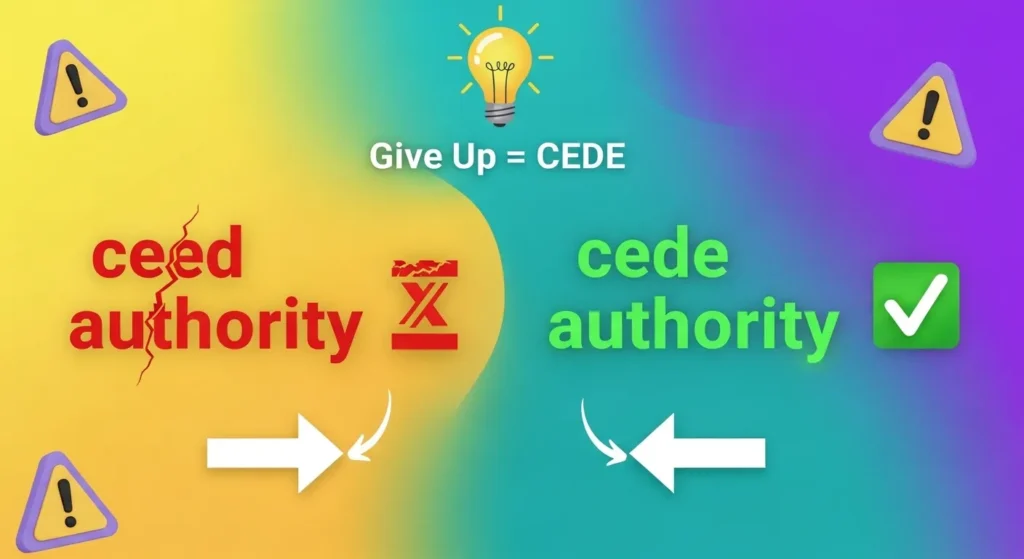
Here are the most frequent errors people make.
❌ The manager decided to ceed authority.
✅ The manager decided to cede authority.
❌ They refused to ceed their rights.
✅ They refused to cede their rights.
❌ Thinking ceed is a shorter form of proceed
✅ Proceed is a separate word; ceed alone is invalid
Quick tip:
If your sentence makes sense with “give up”, then cede is correct.
Cede or Ceed in Everyday Examples
Emails
- “She agreed to cede responsibility to the new team.”
- “The company will not cede control easily.”
News Writing
- “The nation refuses to cede disputed land.”
- “The agreement forces the firm to cede ownership.”
Social Media
- “Never cede your values for approval.”
- “Power is not taken; it is ceded.”
Formal & Academic Writing
- “The ruler was forced to cede authority.”
- “States may cede powers to federal institutions.”
Cede or Ceed: Google Trends & Usage Data
Search behavior shows that “cede or ceed” is commonly searched by:
- Students
- ESL learners
- Legal and business writers
Why the confusion is popular:
- Influence of words like proceed and exceed
- Pronunciation similarity
- Lack of direct correction by spellcheck tools
Usage patterns:
- Cede is frequent in:
- Law
- Politics
- Business
- History
- Ceed appears mostly in:
- Misspellings
- Search queries
- Informal typing errors
The data confirms that ceed is searched because of confusion, not because it’s correct.
Comparison Table: Cede vs Ceed
| Feature | Cede | Ceed |
| Correct English word | Yes | No |
| Meaning | Give up or surrender | None |
| Used in formal writing | Yes | Never |
| Appears in dictionaries | Yes | No |
| Common confusion | Often confused with -ceed | Mistaken spelling |
FAQs: Cede or Ceed
1. Is ceed ever correct?
No. Ceed is not a standalone English word.
2. Why does ceed look correct?
Because of words like proceed and exceed.
3. Is cede used in British English?
Yes. It is used exactly the same way.
4. What part of speech is cede?
Cede is a verb.
5. Can cede be used in casual writing?
Yes, but it is more common in formal contexts.
6. Is cede always about power or land?
Mostly, but it can also refer to responsibility or control.
7. How can I remember the correct spelling?
Think: Cede = concede without “con”.
Conclusion
Once you understand that cede is the only correct form, the confusion with ceed disappears completely. The mistake usually comes from exposure to longer verbs like proceed or exceed, which makes ceed feel familiar. But English doesn’t work that way here.
Cede stands alone and always means to give up, surrender, or hand over something valuable. Whether you are writing an email, exam answer, legal document, or article, choosing cede improves clarity and credibility.
Small spelling decisions can change how professional your writing appears. Now that you know the rule, you’ll never hesitate again and you’ll spot this mistake instantly when others make it.

I am Bryan A. Garner, an American writer and editor focused on English usage, grammar, and word choice.
I am best known for Garner’s Modern English Usage, a reference book widely used by writers, editors, and legal professionals.
My work centers on clarity, precision, and resolving confusing word comparisons in modern English.