Celsius is the correct modern name for the temperature scale, while centigrade is an older term for the same scale.
I remember seeing both words in school books and weather reports and thinking they described two different systems. That confusion is very common.
Many people search “centigrade or celsius” because both terms appear in science and daily life. The good news is simple: they refer to the same temperature scale, but one is official and widely accepted today.
Once you understand the history and usage, choosing the right term becomes easy.
Centigrade or Celsius : Quick Answer
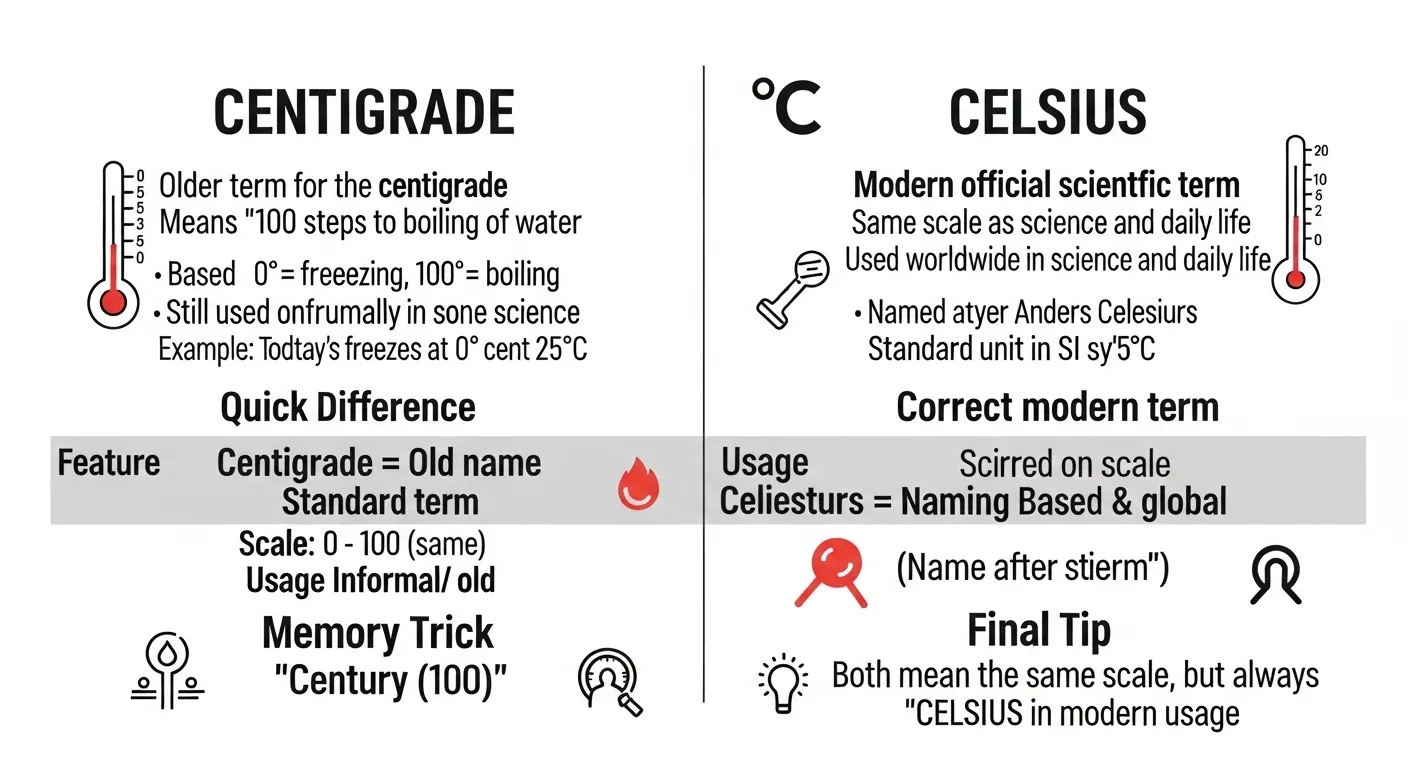
Centigrade = an older name for the temperature scale based on 100 degrees between freezing and boiling
Celsius = the official modern name for the same temperature scale used worldwide
Examples:
- Water freezes at 0°C (Celsius)
- Older texts may say 0 degrees centigrade
Simple rule:
Celsius → modern and correct
Centigrade → old but understandable
Meaning of Centigrade and Celsius
Both terms describe the same temperature measurement system.
Centigrade (Old Term)
- Means “divided into 100 degrees”
- Based on freezing (0°) and boiling (100°) of water
- Used in older books and speech
Example:
- The temperature is 25 degrees centigrade.
Celsius (Modern Term)
- Official scientific name
- Used in weather reports and education
- Standard worldwide
Example:
- Today’s temperature is 25°C.
Origin of Celsius or Centigrade
The scale was developed by Anders Celsius.
- Originally called centigrade because of 100 divisions
- Later renamed Celsius in honor of its creator
Why the change happened:
- To avoid confusion with other “centigrade” systems
- To give proper credit to the scientist
Centigrade or Celsius : Key Differences
| Feature | Centigrade | Celsius |
| Meaning | 100 step scale | Same scale |
| Status | Old term | Official term |
| Usage | Less common | Standard worldwide |
| Accuracy | Same | Same |
Celsius vs Centigrade : Scientific Usage
| Context | Preferred Term | Example |
| Science | Celsius | 37°C body temperature |
| Weather | Celsius | 30°C outside |
| Old texts | Centigrade | 30 degrees centigrade |
| Education | Celsius | Standard teaching |
Key point:
Celsius is the correct term in modern science and daily use.
Which One Should You Use?
Choose based on clarity and modern usage:
- Use Celsius in writing and speaking
- Avoid centigrade in formal contexts
- Understand centigrade when reading older material
Best advice:
Always use Celsius for clear and correct communication.
Common Mistakes with Centigrade or Celsius
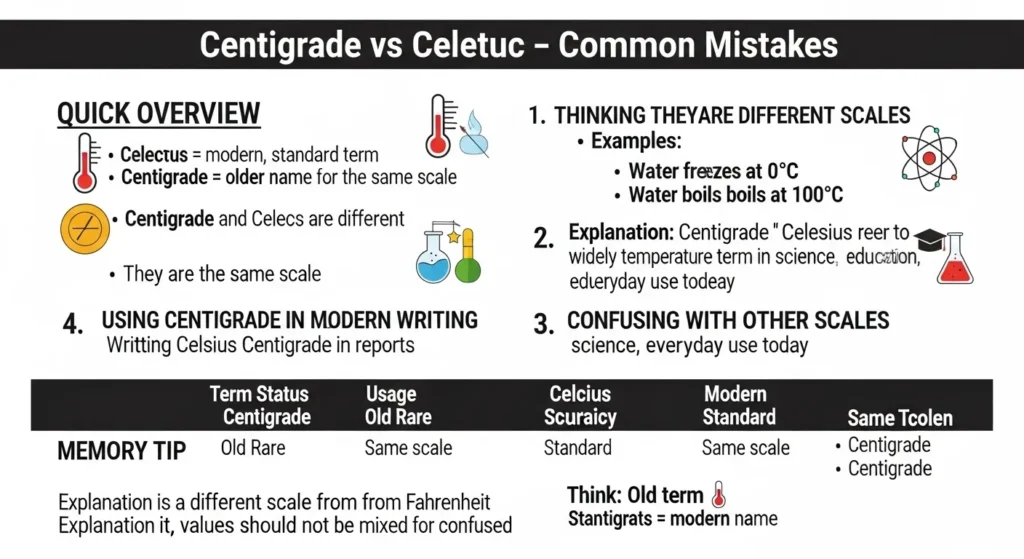
1. Thinking They Are Different Scales
❌ Centigrade and Celsius are different
✅ They are the same scale
2. Using Centigrade in Modern Writing
❌ Writing centigrade in reports
✅ Use Celsius instead
3. Confusing with Other Scales
❌ Mixing with Fahrenheit
✅ Keep scales separate
Centigrade or Celsius in Everyday Examples
In Weather Reports
- Today: 28°C
Science
- Water boils at 100°C
In School
- Students learn Celsius scale
In Old Books
- You may see “centigrade” used
Centigrade vs Celsius : Side by Side Comparison
| Feature | Centigrade | Celsius |
| Age | Older | Modern |
| Use | Rare | Common |
| Meaning | Same | Same |
| Preference | No | Yes |
Centigrade and Celsius : Usage Insight
Why people get confused:
- Same meaning
- Different names
- Old vs modern usage
General pattern:
- Centigrade → older usage
- Celsius → global standard
Important note:
The difference is in name only, not measurement.
Frequently Asked Questions
1. What is the difference between centigrade and Celsius?
There is no difference in value. Only the name has changed.
2. Which term is correct?
Celsius is the correct modern term.
3. Is centigrade wrong?
No, but it is outdated.
4. Why was the name changed?
To honor Anders Celsius and avoid confusion.
5. Do both measure the same temperature?
Yes, exactly the same.
6. Which one is used worldwide?
Celsius is used globally.
7. Can I still use centigrade?
Yes, but it is better to use Celsius.
Conclusion
Understanding the difference between centigrade and Celsius is simple once you know their history. Both terms refer to the same temperature scale based on the freezing and boiling points of water.
The key difference is that centigrade is an older term, while Celsius is the modern and officially accepted name. Today, Celsius is used in science, education, weather reports, and daily communication across the world. Using the correct term helps avoid confusion and keeps your writing clear and professional.
While you may still see “centigrade” in older books or informal speech, it is best to rely on “Celsius” in modern contexts. By remembering that the scale stays the same and only the name has changed, you can confidently use the correct term in any situation.

I am Emily Carter, a British writer and linguistics enthusiast from London.
I specialize in studying the differences between British and American English.
I enjoy exploring how language changes across cultures and regions.
Through my writing, I aim to make English learning simple and interesting for students.