Quick answer first: customer is someone who buys goods or services, while costumer is someone who makes or supplies costumes.
I clearly remember typing an email once and stopping at a single word customer or costumer? The sentence was about a buyer, yet my fingers almost typed costumer. That moment made me realize why so many people search this exact query.
The words look almost identical, sound similar, and spellcheck doesn’t always save you. That confusion slowly turns into doubt, especially in professional writing.
Once I understood the meaning and usage clearly, the problem vanished. In this guide, I’ll break everything down simply, so you never hesitate again.
Customer or Costumer: Quick Answer
Customer means a person who buys goods or services.
Costumer means a person who designs, makes, or supplies costumes.
Simple examples
- The customer paid for the service online.
- The movie hired a professional costumer for historical outfits.
Easy memory trick
- Customer → money, buying, business
- Costumer → costumes, clothes, movies, theater
The Origin of Customer or Costumer
Understanding where words come from often clears confusion.
- Customer comes from the word custom, meaning habit or practice.
Over time, it came to describe people who regularly buy from a business. - Costumer comes from costume, which comes from French and Italian roots related to clothing and dress.
Although they share similar spellings, their origins are different. English kept both words because they serve completely different purposes. That’s why mixing them up changes the meaning of a sentence entirely.
British English vs American English Spelling
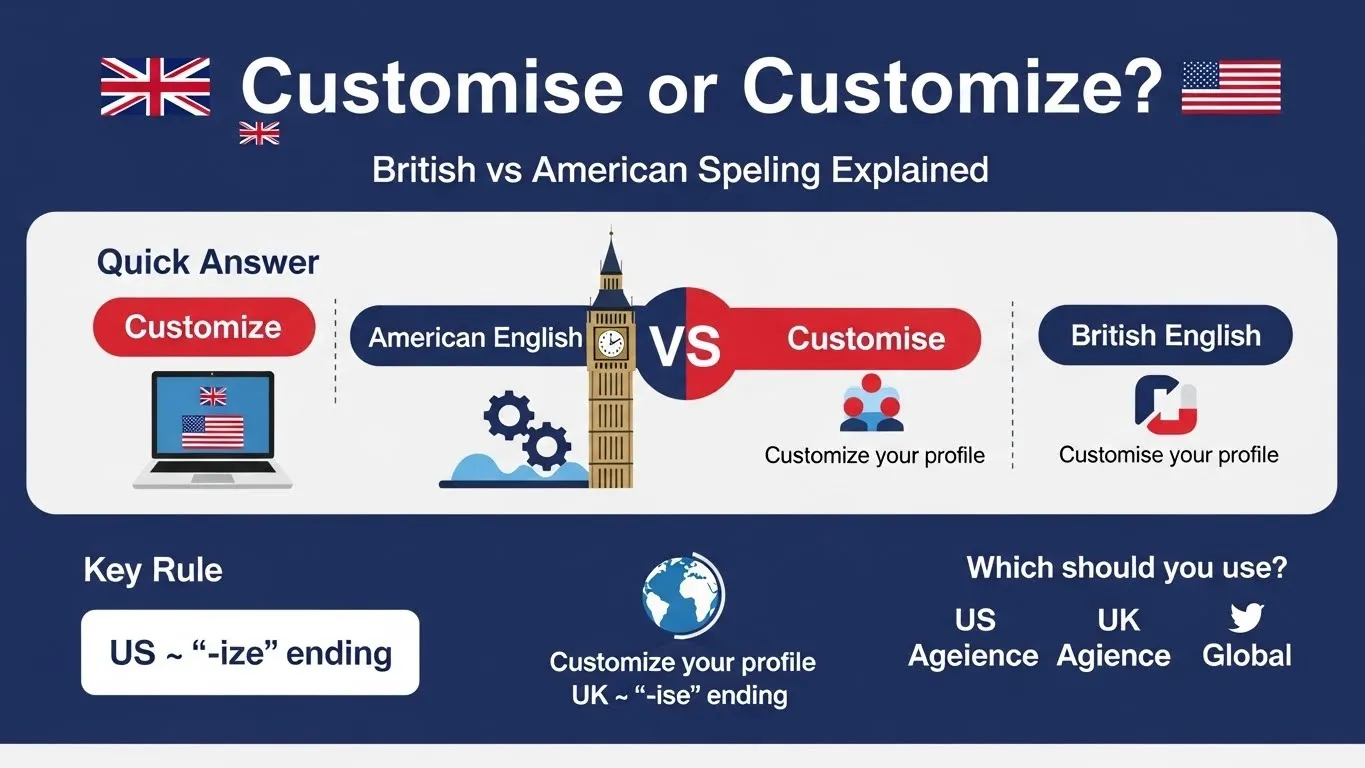
Here’s something important: customer and costumer are spelled the same in British and American English.
There is no regional spelling difference.
What actually differs?
Usage frequency and context.
| Aspect | British English | American English |
| Customer | Very common in daily use | Extremely common in business |
| Costumer | Mostly in theater and film | Common in movies and fashion |
| Spelling | Same | Same |
So if you’re choosing between these words, region doesn’t matter meaning does.
Which Spelling Should You Use?
Use customer if you are talking about:
- Buyers
- Clients
- Shoppers
- Users of services
Use costumer if you are talking about:
- Costume designers
- Film or theater wardrobe staff
- People who make or rent costumes
Audience-based advice
- US audience: Customer is correct for business and marketing.
- UK/Commonwealth audience: Same rule applies.
- Global or SEO content: Always choose based on meaning, not sound.
In business writing, customer is correct 99% of the time.
Common Mistakes with Customer or Costumer
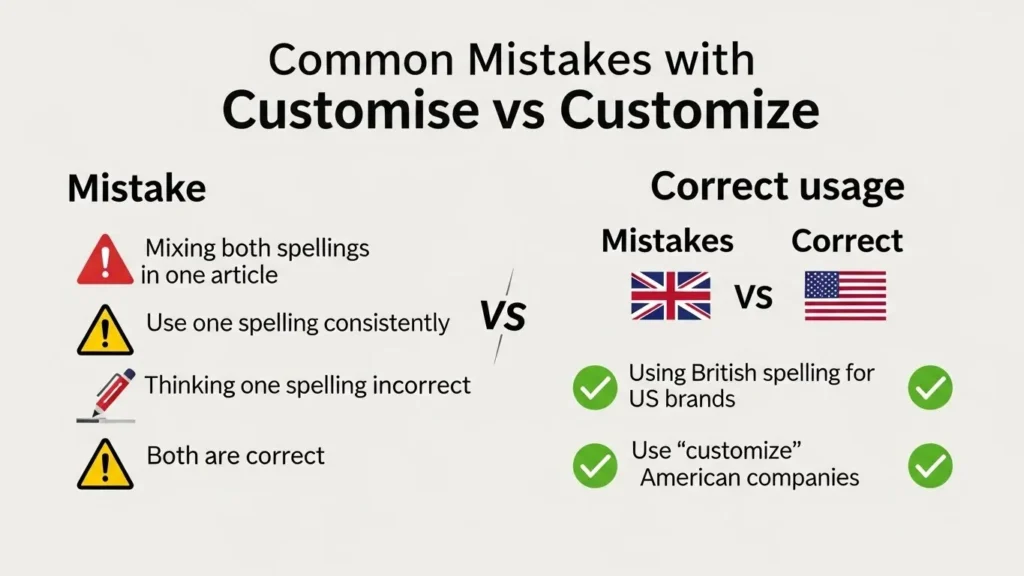
This confusion is extremely common, especially online.
❌ Our costumers are very satisfied with our service.
✅ Our customers are very satisfied with our service.
❌ The store values every costumer.
✅ The store values every customer.
❌ She works as a customer for a film studio.
✅ She works as a costumer for a film studio.
Simple check
Ask yourself:
Is this person buying something? → customer
Is this person making clothes? → costumer
Customer or Costumer in Everyday Examples
Emails
- Dear customer, thank you for your purchase.
- The film hired a skilled costumer for the production.
News
- The company improved service to retain loyal customers.
- The costumer recreated traditional outfits for the drama.
Social media
- Happy to be a loyal customer of this brand!
- Behind the scenes with our amazing costumer 🎭
Formal writing
- Customer satisfaction is a key performance indicator.
- The costumer ensured historical accuracy in wardrobe design.
Customer or Costumer: Google Trends & Usage Data
Search data shows “customer or costumer” is a high-intent query. People usually search it when:
- Writing business emails
- Creating website content
- Working on resumes
- Publishing blogs or ads
Usage patterns
- Customer is one of the most frequently used nouns in business English worldwide.
- Costumer is much rarer and mainly appears in:
- Film credits
- Theater programs
- Fashion and costume design fields
This tells us most people don’t mean costumer they accidentally type it.
Comparison Table: Customer vs Costumer
| Feature | Customer | Costumer |
| Meaning | Buyer of goods/services | Maker of costumes |
| Field | Business, retail, services | Film, theater, fashion |
| Frequency | Very high | Low |
| Refers to shopping | Yes | No |
| Refers to clothing design | No | Yes |
| Common mistake | Misspelled as costumer | Rarely misused |
Frequently Asked Questions (FAQs)
1. Is costumer a real word?
Yes, but it refers only to someone who works with costumes.
2. Why do people confuse customer and costumer?
Because they look similar and differ by only one letter.
3. Is costumer used in business?
No. Business writing almost always uses customer.
4. Can spellcheck catch this mistake?
Not always, because both words are correct English words.
5. Which word should I use on my website?
Use customer, unless you sell or design costumes.
6. Is costumer common in everyday English?
No, it’s mostly used in professional costume-related fields.
7. Can customer ever mean costume-related?
No. The meanings never overlap.
Conclusion
When I first noticed how often customer or costumer gets mixed up, I understood why it causes stress in professional writing. One small letter can change the entire meaning of a sentence. The good news is that the fix is simple. If money, service, or buying is involved, customer is your word.
If clothing design for movies or theater is involved, costumer is correct. Most writers only need customer, and using costumer by mistake can make writing look careless. By learning this distinction once, you save yourself from repeated doubt. Clear word choices build trust, especially in business and online communication. Now you know the difference and you won’t make this mistake again.

I am Bryan A. Garner, an American writer and editor focused on English usage, grammar, and word choice.
I am best known for Garner’s Modern English Usage, a reference book widely used by writers, editors, and legal professionals.
My work centers on clarity, precision, and resolving confusing word comparisons in modern English.