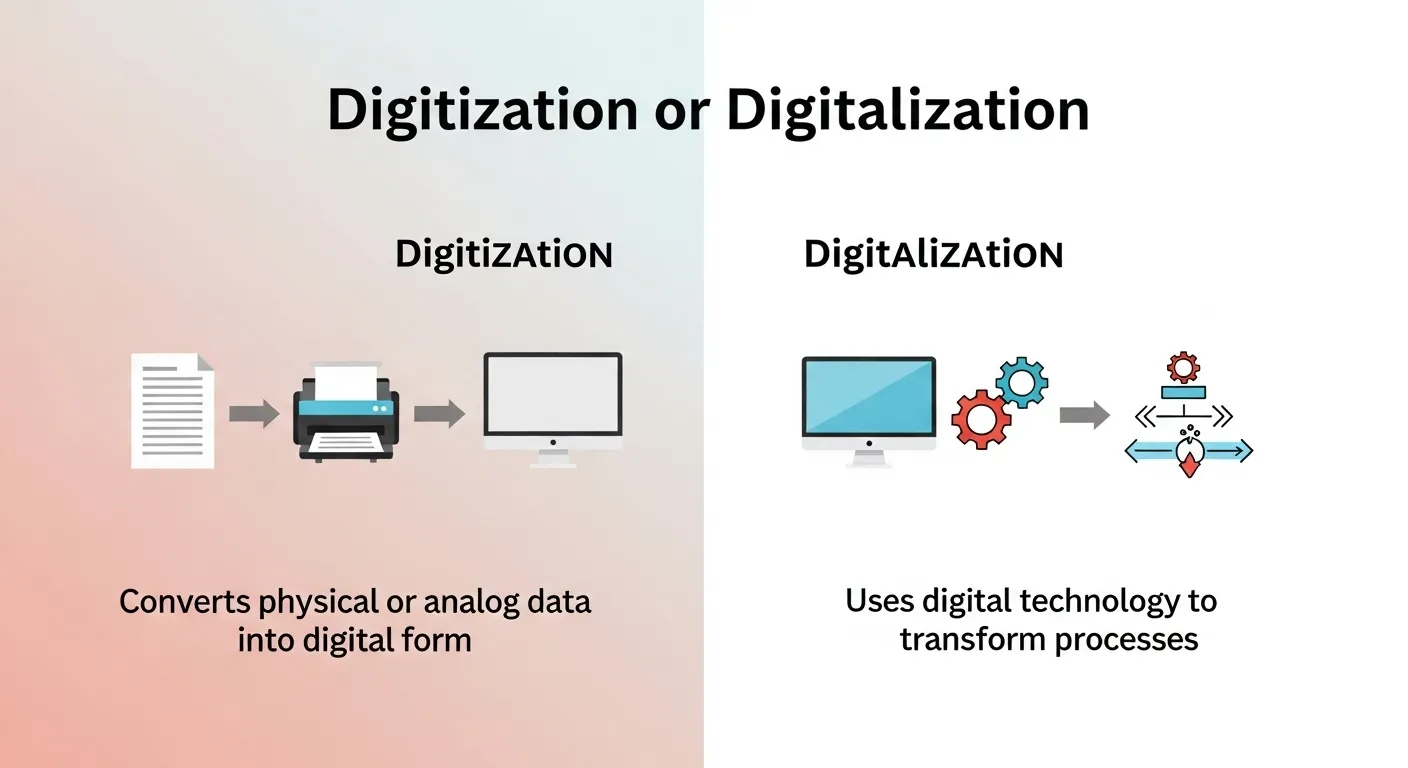
The short answer is this: digitization is about converting something into digital form, while digitalization is about using digital technology to change processes or systems.
I still remember working on a tech-related article and stopping mid-sentence. I had written “digitalization of paper records”, but something felt off. Were the records being converted, or was the whole system changing? That doubt pushed me to search “digitization or digitalization.”
Many people face this confusion because the words look similar, sound technical, and are often used interchangeably online. I used to mix them up too.
Once I understood the difference, everything became clear. In this guide, I’ll explain both terms in a simple, human, and practical way.
Digitization or Digitalization: Quick Answer
Digitization means converting information from physical or analog form into digital form.
Digitalization means using digital technologies to improve or transform processes, services, or business models.
Examples:
- ✔ Scanning paper files is digitization.
- ✔ Using software to automate workflows is digitalization.
👉 Data conversion? → Digitization
👉 Process or system change? → Digitalization
The Origin of Digitization or Digitalization
Looking at the origin helps remove confusion.
Digitization comes from the word digit, meaning number or finger. It originally referred to representing information using digits (0s and 1s). As computers evolved, digitization came to mean converting physical data into digital data.
Digitalization developed later. It describes the broader impact of digital tools on how work is done. Instead of focusing on data, it focuses on process improvement and transformation.
Why confusion exists:
- Both words come from digital
- Both are common in technology writing
- Many people use digitalization as a catch-all term
But technically, they describe different stages of digital progress.
British English vs American English Spelling
This is not a UK vs US spelling difference.
Both British and American English use:
- Digitization
- Digitalization
However, usage preference varies by field, not country.
Comparison Table
| Term | Meaning | UK English | US English |
| Digitization | Data conversion | Same | Same |
| Digitalization | Process transformation | Same | Same |
The difference is conceptual, not regional.
Which Spelling Should You Use?
The correct choice depends on what you are describing.
- Scanning documents, photos, records → Digitization
- Automating systems, using AI, cloud adoption → Digitalization
Audience-based advice:
- US audience → Use terms precisely
- UK/Commonwealth audience → Same rule
- Global or professional audience → Precision matters more than style
Easy memory trick:
- Digitization = data
- Digitalization = doing things digitally
Common Mistakes with Digitization or Digitalization
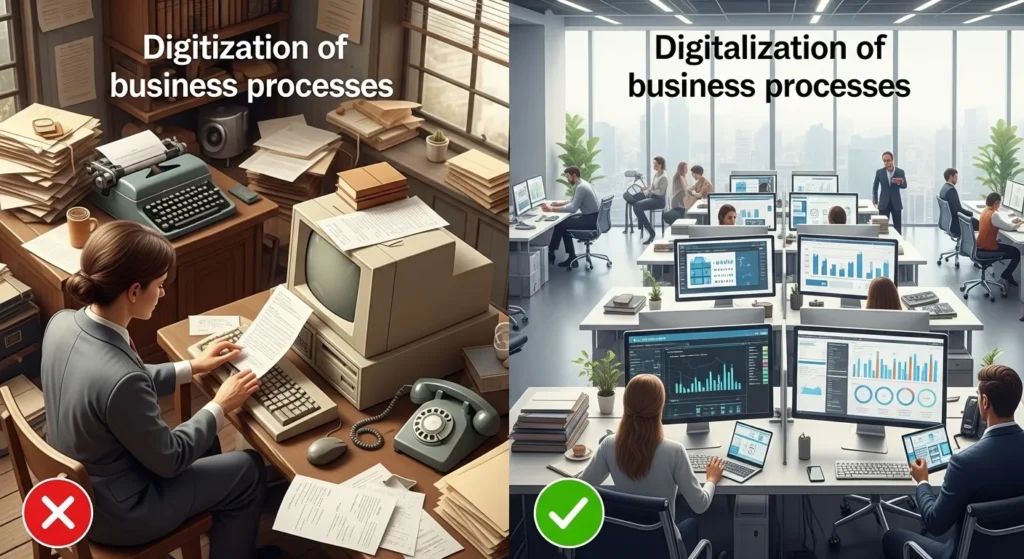
Here are frequent errors I see.
❌ Digitization of business processes improved efficiency.
✅ Digitalization of business processes improved efficiency.
❌ Digitalization of old photos took weeks.
✅ Digitization of old photos took weeks.
❌ Using digitalization for simple scanning
✅ Use digitization for format conversion
Digitization or Digitalization in Everyday Examples
Emails
- “We completed the digitization of all paper files.”
- “The company is focusing on digitalization this year.”
News Writing
- “Government accelerates digitization of land records.”
- “Banks push digitalization of customer services.”
Social Media
- “Digitization saves space and time.”
- “Digitalization is changing how we work.”
Formal & Professional Writing
- “Digitization ensures long-term data preservation.”
- “Digitalization drives organizational transformation.”
Digitization or Digitalization: Google Trends & Usage Data
Search trends show “digitization or digitalization” is common among:
- Students
- IT professionals
- Business analysts
- Content writers
Usage patterns:
- Digitization appears more in:
- Archiving
- Libraries
- Government records
- Data management
- Digitalization appears more in:
- Business strategy
- Industry 4.0
- Automation
- Digital transformation
Regional interest:
- United States
- United Kingdom
- India
- Pakistan
- Germany
- Australia
The data shows confusion increases as digital topics grow.
Comparison Table: Digitization vs Digitalization
| Feature | Digitization | Digitalization |
| Focus | Data | Processes |
| Scope | Narrow | Broad |
| Example | Scanning documents | Automating workflows |
| Technical level | Basic | Strategic |
| Stage | First step | Next step |
FAQs: Digitization or Digitalization
1. Are digitization and digitalization the same?
No. Digitization is conversion; digitalization is transformation.
2. Which term is more technical?
Digitalization is more strategic and broad.
3. Is digitalization part of digital transformation?
Yes. It is a key component.
4. Can a company digitize without digitalizing?
Yes. They can scan data without changing processes.
5. Which word should I use in exams?
Use the term that matches the definition clearly.
6. Is this a US vs UK difference?
No. Both regions use both terms.
7. Which is more common in business writing?
Digitalization.
Conclusion
The confusion between digitization and digitalization is understandable, especially in a world driven by technology buzzwords. But once you focus on meaning, the difference becomes clear. Digitization is about converting physical or analog information into digital form.
Digitalization is about using that digital data to change how work is done. One is a technical step; the other is a strategic shift. Mixing them up can weaken professional writing, especially in business, IT, or academic contexts.
When you choose the correct term, your message becomes sharper and more credible. Remember this simple idea: first you digitize data, then you digitalize processes. With that clarity, you’ll always choose the right word.

I am Emily Carter, a British writer and linguistics enthusiast from London.
I specialize in studying the differences between British and American English.
I enjoy exploring how language changes across cultures and regions.
Through my writing, I aim to make English learning simple and interesting for students.