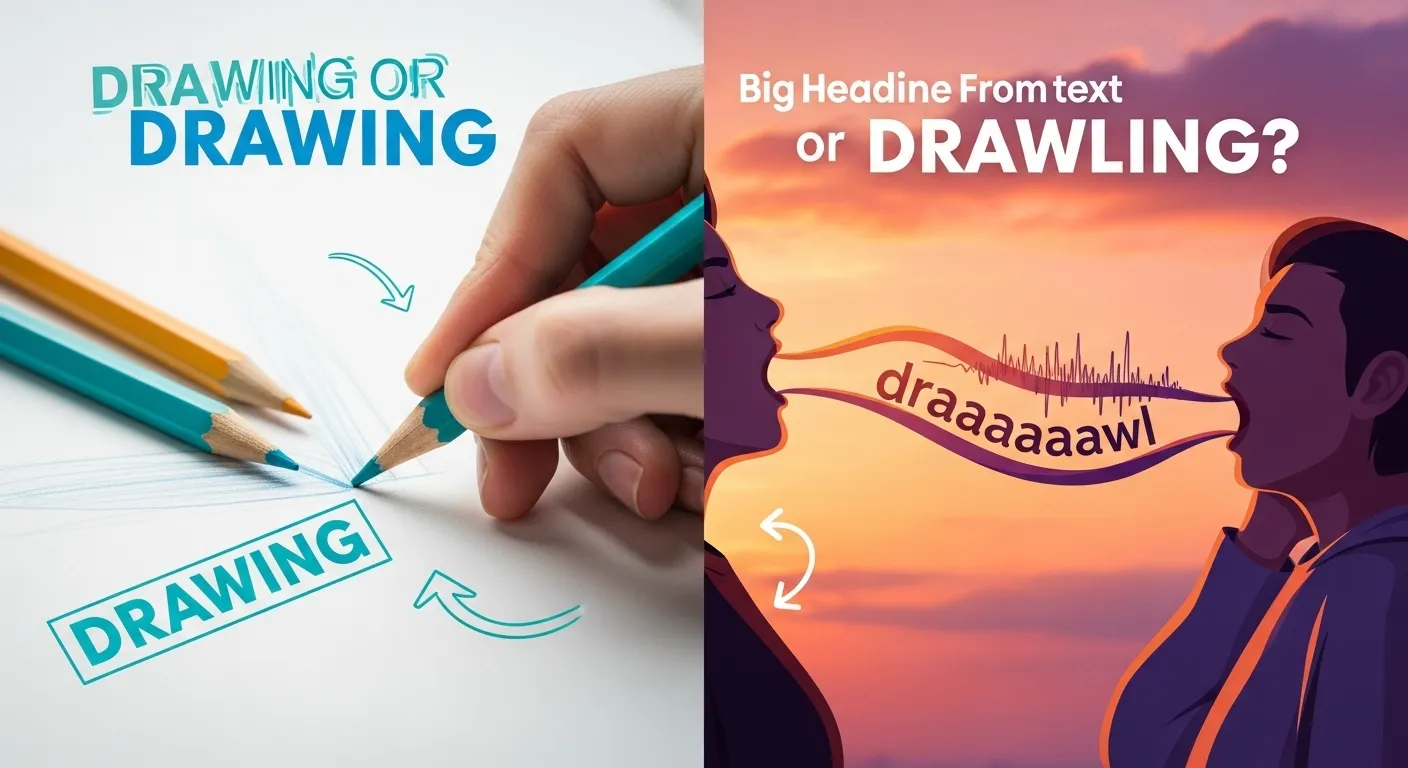
The correct word depends on meaning: drawing relates to sketching or pulling, while drawling refers to slow, stretched speech.
I still remember reading a comment online that said, “He has a drawing accent,” and I stopped immediately. Something felt off.
I knew drawing from art and sketching, but accent? That moment pushed me to search “drawing or drawling.” Many people make this mistake because both words look similar and sound almost the same when spoken quickly. The confusion usually comes from pronunciation, not spelling rules.
Once I understood what each word truly means and where it belongs, the difference became obvious. In this article, I’ll walk you through that clarity in a simple, engaging, and practical way.
Drawing or Drawling: Quick Answer
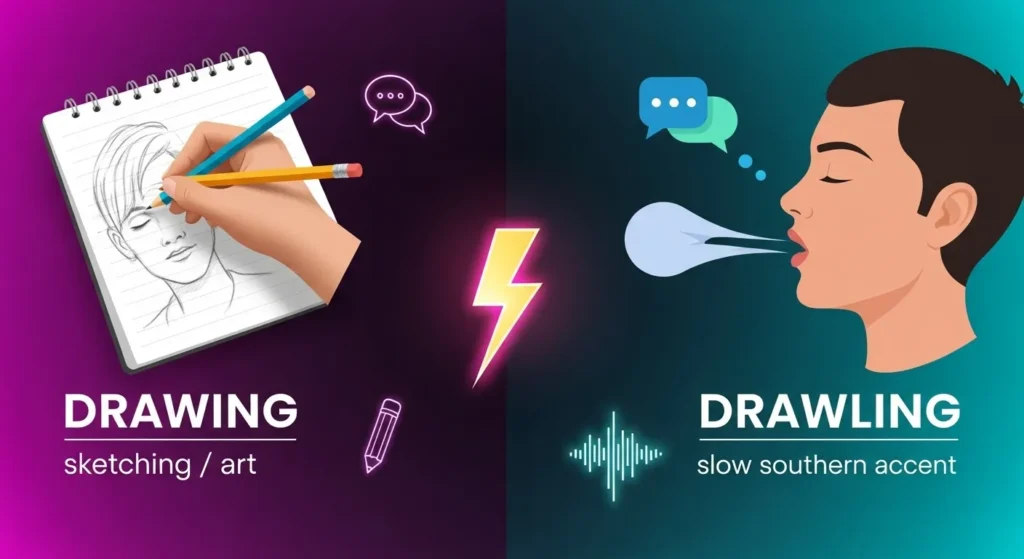
Drawing means sketching, illustrating, or pulling something.
Drawling means speaking slowly with stretched-out vowel sounds.
Examples:
- ✔ She enjoys drawing landscapes.
- ✔ He speaks with a Southern drawling accent.
👉 If it’s about art or pulling, use drawing.
👉 If it’s about speech or accent, use drawling.
The Origin of Drawing or Drawling
Understanding where these words come from makes the difference clear.
Drawing comes from Old English dragan, meaning to pull or drag. Over time, this meaning expanded to include drawing pictures because early sketches involved dragging tools across surfaces.
That’s why drawing can mean:
- Making pictures
- Pulling something
- Attracting attention (drawing a crowd)
Drawling, on the other hand, comes from the word drawl, which developed in the 16th century. It describes speech where sounds are drawn out slowly. The idea is not pulling an object, but stretching sounds while talking.
The confusion exists because:
- Both come from the root idea of “draw”
- They look almost identical
- Pronunciation overlaps in fast speech
But their meanings and usage are very different.
British English vs American English Spelling
This is not a British vs American spelling issue.
Both drawing and drawling are spelled the same in:
- British English
- American English
- Australian English
- Canadian English
The difference is meaning, not regional spelling.
Examples:
- UK: His drawling tone annoyed the audience.
- US: She is drawing a portrait.
Comparison Table
| Word | Meaning | UK English | US English |
| Drawing | Art or pulling | Same | Same |
| Drawling | Slow speech | Same | Same |
Which Spelling Should You Use?
Choosing the correct word depends entirely on context.
- Talking about art, design, or sketches? → Drawing
- Talking about speech, accent, or pronunciation? → Drawling
Audience-based advice:
- US audience → Same rules apply
- UK/Commonwealth audience → Same rules apply
- Global audience → Focus on meaning, not spelling style
Easy memory trick:
- Drawing → Think drawing pictures
- Drawling → Think long, lazy speech
Common Mistakes with Drawing or Drawling
Here are the most common errors I see.
❌ He has a drawing Southern accent.
✅ He has a drawling Southern accent.
❌ She is drawling a sketch.
✅ She is drawing a sketch.
❌ Using drawing when talking about speech
✅ Use drawling for pronunciation or tone
Quick tip:
If you can replace the word with “sketching,” use drawing.
If you can replace it with “slow speech,” use drawling.
Drawing or Drawling in Everyday Examples
Emails
- “She is drawing illustrations for the project.”
- “His drawling way of speaking makes meetings longer.”
News Writing
- “The artist’s drawing sold for millions.”
- “The politician’s drawling speech divided opinions.”
Social Media
- “Spent the evening drawing portraits.”
- “That drawling voice is oddly relaxing.”
Formal Writing
- “The study involves drawing diagrams to explain results.”
- “The speaker’s drawling tone reduced clarity.”
Drawing or Drawling: Google Trends & Usage Data
Search interest for “drawing or drawling” spikes during:
- English exams
- Accent discussions
- Writing and grammar searches
- ESL learning periods
Usage patterns:
- Drawing is far more common overall because of its broad meaning
- Drawling is less frequent and mostly used in:
- Accent descriptions
- Literature
- Linguistics
Countries where this confusion is common:
- United States
- United Kingdom
- India
- Pakistan
- Australia
This shows the confusion is global and meaning-based, not regional.
Comparison Table: Drawing vs Drawling
| Feature | Drawing | Drawling |
| Meaning | Sketching or pulling | Slow speech |
| Related to art | Yes | No |
| Related to speech | No | Yes |
| Part of speech | Noun / Verb | Adjective / Verb |
| Common confusion | Mixed with drawling | Mixed with drawing |
FAQs: Drawing or Drawling
1. Is “drawling accent” correct?
Yes. It refers to slow, stretched speech.
2. Can “drawing” describe speech?
No. It should only describe art, pulling, or attraction.
3. Why do people confuse drawing and drawling?
Because they look and sound similar.
4. Is drawling common in American English?
Yes, especially when describing Southern accents.
5. Is drawling negative?
Not always. It can be neutral or descriptive.
6. Can drawing be a noun and a verb?
Yes. A drawing or she is drawing.
7. Which word is more common in exams?
Drawing is more common, but drawling appears in literature questions.
Conclusion
Once you clearly understand the difference between drawing and drawling, the confusion disappears for good. Drawing belongs to the world of art, sketches, pulling, and attraction. Drawling belongs to speech, accents, and pronunciation. The similarity in spelling tricks many writers, but context always gives the right answer.
Paying attention to meaning instead of sound makes your writing sharper and more professional.
If you’re writing an essay, describing an accent, posting online, or drafting formal content, choosing the correct word shows clarity and confidence.
Small distinctions like this separate good writing from careless writing. Now that you know the rule, you’ll never hesitate again.

I am Emily Carter, a British writer and linguistics enthusiast from London.
I specialize in studying the differences between British and American English.
I enjoy exploring how language changes across cultures and regions.
Through my writing, I aim to make English learning simple and interesting for students.