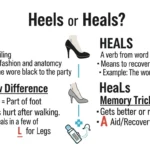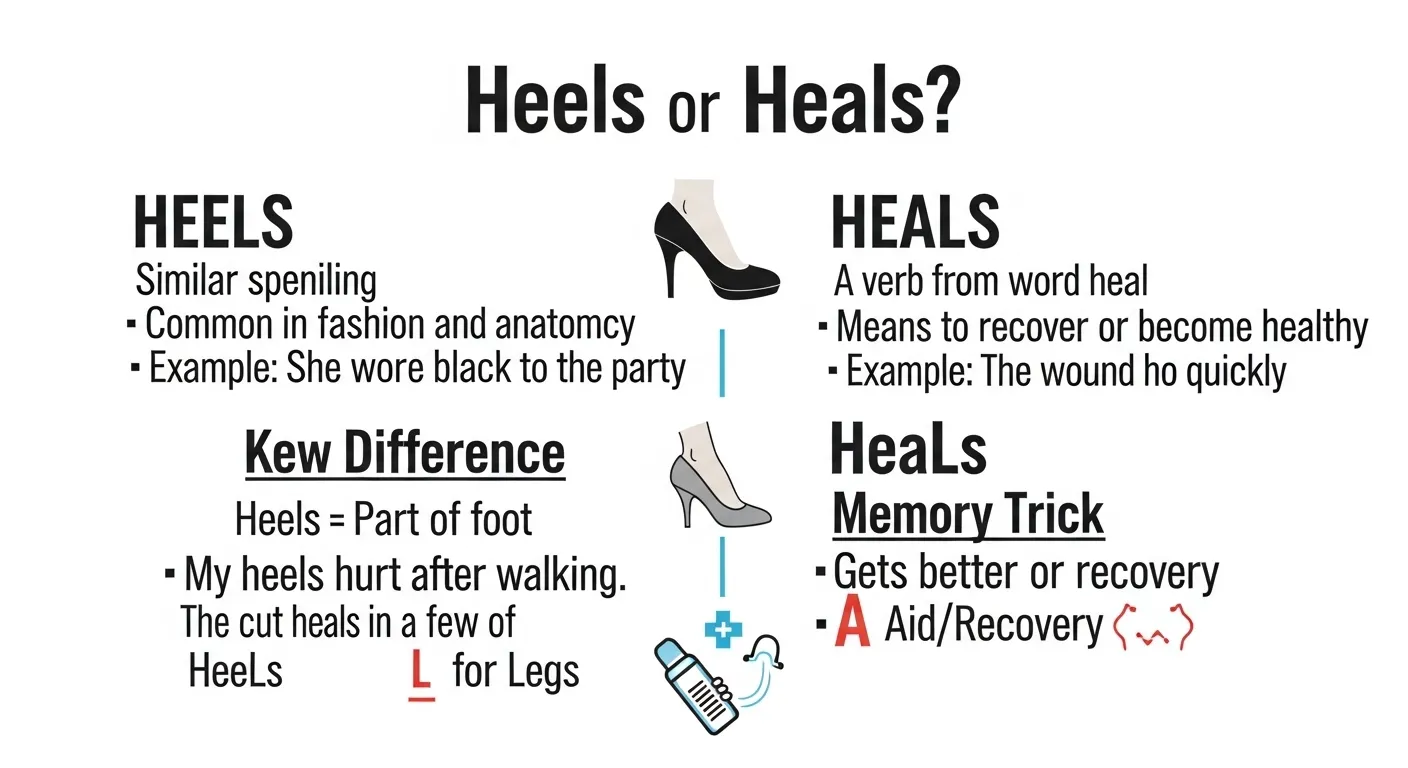
Heals refers to the act of recovering or becoming healthy again, while heels are the back parts of the foot or the raised part of certain shoes.
I remember once typing “My foot hurts when I walk in heals,” and later realizing the correct word should have been heels. That small spelling mistake completely changed the meaning of the sentence. Many people search “heals or heels” because these two words sound exactly the same but have very different meanings.
This type of confusion is common in English because both words are pronounced the same way but spelled differently. Understanding their meanings makes choosing the correct word easy.
Heals or Heels : Quick Answer
Heals = a verb meaning to recover or make healthy again.
Heels = a noun meaning the back part of the foot or the raised part of a shoe.
Examples:
- Time heals emotional pain.
- She wore high heels to the party.
Simple rule:
Heals → recovery or health
Heels → part of the foot or shoe
Meaning of Heals and Heels
The difference between heals and heels comes from their meanings and grammatical roles.
Heals (Verb)
Heals is the third person present form of the verb heal, which means to recover from an injury or make someone healthy again.
Examples:
- The body naturally heals over time.
- Good rest helps the body heals faster.
- Time heals many emotional wounds.
In most cases, heals refers to physical or emotional recovery.
Heels (Noun)
Heels is the plural form of heel, which refers to the back part of the human foot or the raised part of certain shoes.
Examples:
- Her heels were sore after walking all day.
- She bought a pair of high heels.
- The runner felt pain in his heels.
The word is often used when talking about shoes, especially high heels.
Origin of Heals or Heels
The words heal and heel developed from different Old English roots.
- Heal comes from an Old English word meaning to make whole or healthy again.
- Heel comes from another Old English word referring to the back part of the foot.
Because these words developed from different sources but sound the same today, they are considered homophones in English.
Heals and Heels Grammar Rule
The easiest way to choose between heals and heels is to focus on the meaning of the sentence.
| Word | Part of Speech | Meaning | Example |
| Heals | Verb | To recover or become healthy | Time heals wounds. |
| Heels | Noun | Back part of foot or shoe | She wore high heels. |
Examples:
- Time heals emotional pain.
- Her heels hurt after the long walk.
If the sentence talks about recovery, use heals.
If it refers to feet or shoes, use heels.
Heels or Heals in Everyday Examples
In Health Conversations
- The body slowly heals after surgery.
- Proper care helps the skin heals faster.
Fashion
- She wore elegant heels to the event.
- High heels can sometimes cause foot pain.
In Sports
- Rest helps the injury heals quickly.
- The runner felt pressure in his heels.
In Daily Life
- Time heals emotional wounds.
- She took off her heels after the party.
Common Mistakes with Heals or Heels
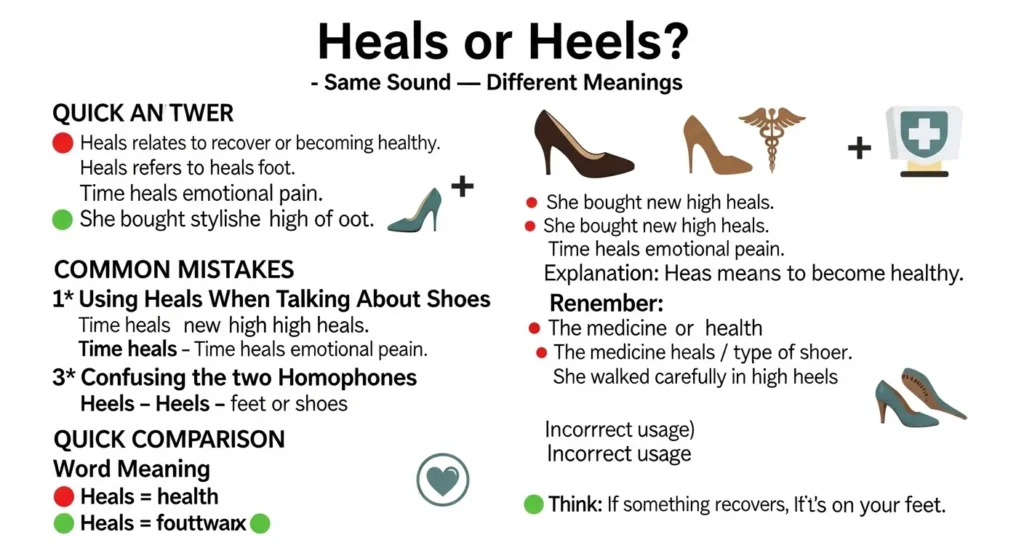
1. Using Heals When Talking About Shoes
❌ She bought new high heals.
✅ She bought new high heels.
2. Using Heels When Talking About Recovery
❌ Time heels emotional pain.
✅ Time heals emotional pain.
3. Confusing the Two Homophones
Remember:
- Heals → recovery
- Heels → feet or shoes
Heals vs Heels : Side by Side Comparison
| Feature | Heals | Heels |
| Meaning | Recovery or becoming healthy | Back part of foot or shoe |
| Part of speech | Verb | Noun |
| Example sentence | Time heals wounds. | She wore high heels. |
| Context | Health or recovery | Fashion or body parts |
Frequently Asked Questions
1. What is the difference between heals and heels?
Heals refers to recovery or becoming healthy, while heels refers to the back part of the foot or a type of shoe.
Example:
- Time heals wounds.
- She wore high heels.
2. Is heals a verb or a noun?
Heals is a verb, specifically the third person present form of heal.
Example:
- The body heals naturally over time.
3. Is heels a noun?
Yes. Heels is a plural noun referring to the back part of the foot or the raised part of a shoe.
Example:
- Her heels hurt after walking.
4. Why are heals and heels confusing?
They sound exactly the same in pronunciation but have different spellings and meanings, making them homophones.
5. How can I remember the difference between heals and heels?
Use this simple trick:
- Heals → health or recovery
- Heels → feet or shoes
Example:
- Time heals emotional pain.
- She walked carefully in high heels.
Conclusion
Understanding the difference between heals and heels becomes simple once you focus on their meanings. Heals comes from the verb heal and refers to recovery, improvement, or becoming healthy again.
Heels, on the other hand, refers to the back part of the foot or the raised part of certain shoes, such as high heels. Although the two words sound identical in pronunciation, their meanings and uses are completely different.
This is why they are considered homophones in English. The key to using them correctly is to think about the context of the sentence. If the sentence is about recovery or health, the correct word is heals. If it refers to shoes or parts of the foot, the correct word is heels. With this simple rule, you can avoid a common spelling mistake and write with more confidence.

I am Lynne Truss, a British writer and journalist who is best known for my work on English grammar. I have always been interested in language and punctuation, especially how small mistakes can change meaning. Through my books, I try to make grammar easy, interesting, and enjoyable for readers.