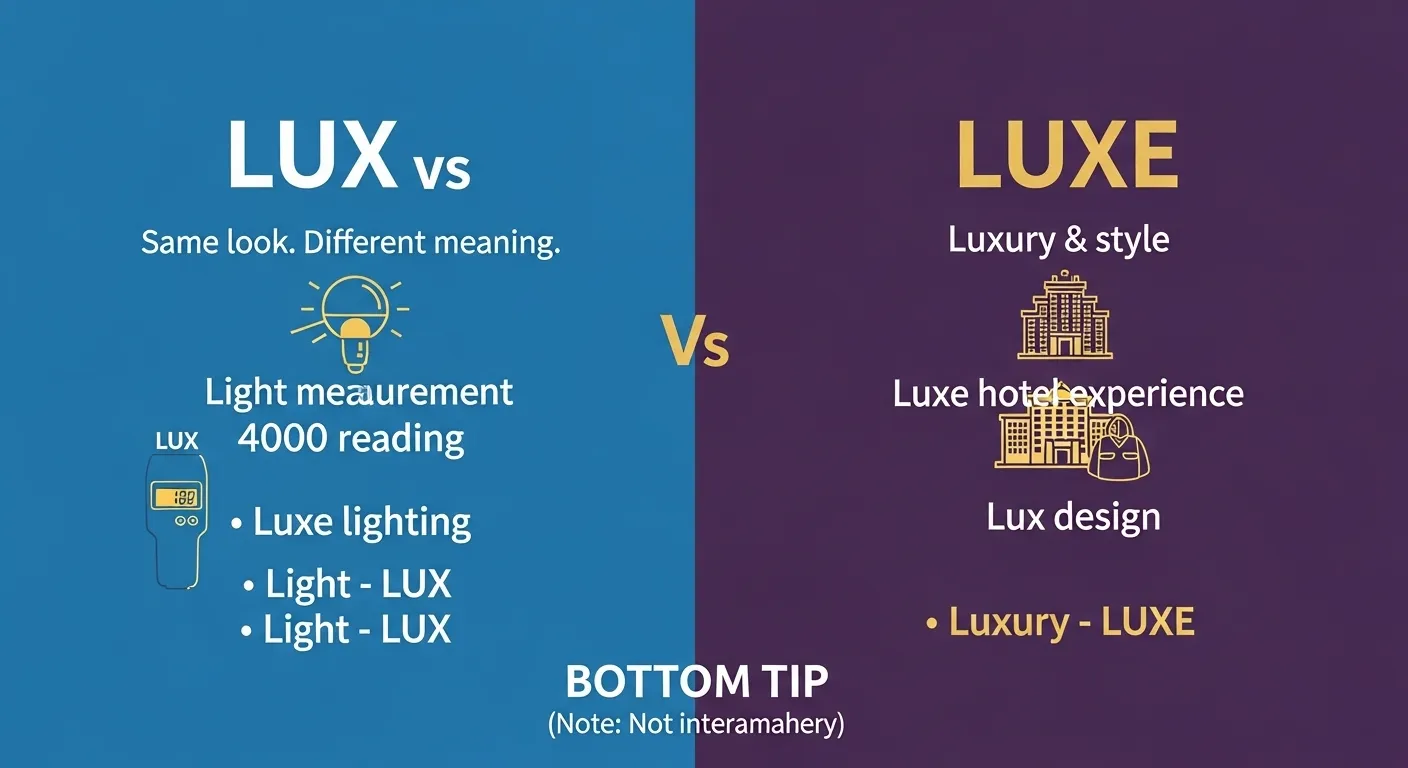
The quick answer is this: lux and luxe are both correct—but they do not mean the same thing.
I remember the first time I searched lux or luxe. I was writing a product description and froze. One website used lux, another used luxe, and both looked right.
That confusion pushed me to dig deeper. Why are people searching this keyword so often? Because these two words look similar, sound related, and appear everywhere—from lighting specs to fashion brands.
At first, I thought it was just a spelling difference. Then I realized it’s not. One is a scientific unit, the other a style word. Once you understand this, the confusion disappears completely. In this guide, I’ll walk you through the difference, usage rules, and how to choose the right one every time.
Lux or Luxe: Quick Answer
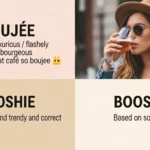
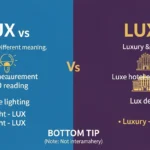
Lux is a scientific measurement of light, while luxe is a style word meaning luxury or premium quality.
Examples:
- The room needs at least 300 lux for reading.
- This hotel offers a luxe experience.
If you are talking about brightness, use lux.
If you are talking about style, comfort, or luxury, use luxe.
They are not interchangeable, even though many people assume they are.
The Origin of Lux or Luxe
The confusion between lux and luxe exists because both come from Latin, but they evolved differently.
- Lux comes from the Latin word lux, meaning light.
Over time, science adopted it as an official unit to measure illumination. - Luxe comes from the French word luxe, meaning luxury, richness, or indulgence.
English borrowed it mainly for fashion, branding, and lifestyle writing.
So the spelling difference exists because:
- Lux stayed technical and scientific.
- Luxe became expressive and stylish through French influence.
That’s why you see lux in engineering manuals and luxe in hotel ads.
British English vs American English Spelling
This is where many readers get confused—but here’s the key point:
👉 This is NOT a British vs American spelling issue.
Both British and American English:
- Use lux for light measurement
- Use luxe for luxury-related meanings
Comparison Table
| Term | Meaning | Used In | UK Usage | US Usage |
| Lux | Unit of light measurement | Science, lighting, architecture | ✔ Yes | ✔ Yes |
| Luxe | Luxury or premium style | Fashion, hotels, branding | ✔ Yes | ✔ Yes |
So if someone tells you lux is American and luxe is British, that is incorrect.
Which Spelling Should You Use?
The right choice depends on context, not country.
Use lux if your audience is:
- Engineers
- Architects
- Students
- Technical readers
- Anyone dealing with lighting, photography, or science
Example:
Office lighting should be between 300–500 lux.
Use luxe if your audience is:
- Lifestyle readers
- Fashion buyers
- Hotel guests
- Marketing or branding audiences
Example:
The resort offers a calm and luxe atmosphere.
For global audiences:
- Technical content → lux
- Promotional or creative content → luxe
Choosing the wrong one can make your writing look unprofessional.
Common Mistakes with Lux or Luxe
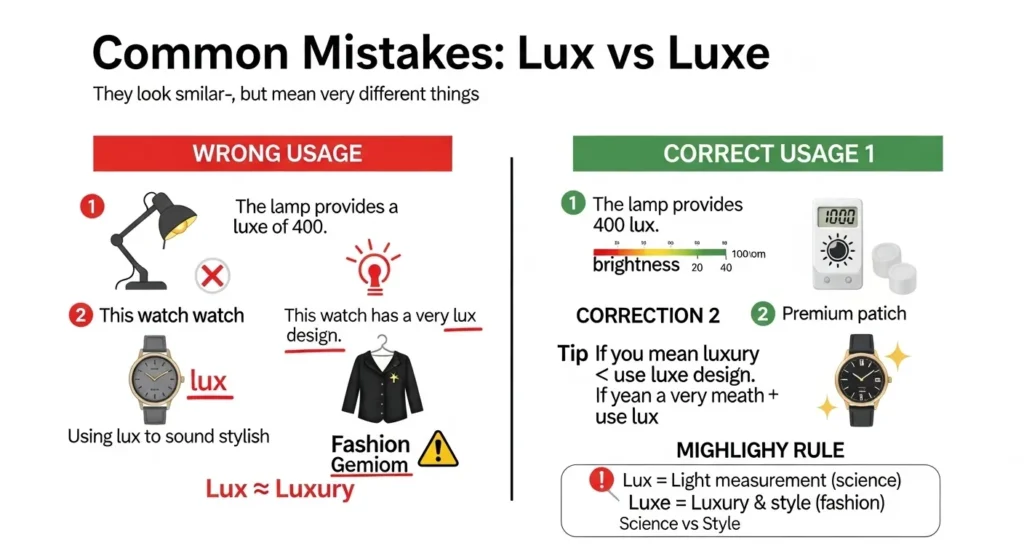
Let’s fix the most frequent errors.
❌ Mistake 1:
The lamp provides a luxe of 400.
✅ Correction:
The lamp provides 400 lux.
❌ Mistake 2:
This watch has a very lux design.
✅ Correction:
This watch has a very luxe design.
❌ Mistake 3:
Using lux to sound stylish.
✅ Tip:
If you mean luxury, always use luxe, not lux.
Lux or Luxe in Everyday Examples
Emails
- Please ensure the workspace meets the required lux levels.
- We are proud to offer a luxe customer experience.
News
- New building codes require higher lux standards.
- The brand launched a new luxe collection.
Social Media
- Morning sunlight hitting just right—perfect lux levels.
- Living my best luxe life today ✨
Formal Writing
- Illumination was measured at 450 lux.
- The hotel is known for its understated luxe aesthetic.
Lux or Luxe: Google Trends & Usage Data
Search behavior shows something interesting:
- Lux is mostly searched in:
- Engineering
- Photography
- Architecture
- Academic contexts
- Luxe is more popular in:
- Fashion
- Lifestyle blogs
- Travel
- Branding and marketing
By country:
- Lux searches are strong worldwide due to technical use.
- Luxe is especially popular in the US, UK, and fashion-driven markets.
This tells us one thing:
👉 People are not confused about spelling—they’re confused about meaning.
Lux vs Luxe: Comparison Table
| Feature | Lux | Luxe |
| Part of speech | Noun | Adjective / Noun |
| Meaning | Light measurement | Luxury, premium quality |
| Field | Science, lighting | Fashion, lifestyle |
| Formal usage | Yes | Yes |
| Interchangeable | ❌ No | ❌ No |
FAQs: Lux or Luxe
1. Is lux a real English word?
Yes. It is an official SI unit for measuring light intensity.
2. Is luxe informal?
No. It is widely accepted in professional branding and formal writing.
3. Can I use lux instead of luxe?
No. That would change the meaning completely.
4. Is luxe French?
It comes from French but is fully accepted in English.
5. Which one should I use in marketing?
Use luxe. It signals premium quality and elegance.
6. Which one should I use in technical writing?
Always use lux.
7. Why do people confuse lux and luxe?
Because they look similar and both suggest “something special,” but only luxe relates to luxury.
Conclusion
Understanding lux or luxe is simpler than it first appears. The confusion comes from appearance, not meaning. Lux belongs to the world of science, lighting, and measurement.
It is precise, factual, and technical. Luxe belongs to style, comfort, and luxury. It adds emotion, elegance, and branding power to your writing.
I once thought it was just a spelling choice, but learning the difference completely changed how confidently I write. When you choose the correct word, your content instantly feels clearer and more professional.
If you’re writing an email, a product description, or a technical report, using the right term shows attention to detail. Remember this rule: light equals lux, luxury equals luxe. Follow it, and you’ll never hesitate again when this keyword appears in your writing.

I am Mignon Fogarty, an American author and language expert also known as “Grammar Girl.”
I focus on explaining grammar rules, spelling mistakes, and confusing words in a simple and friendly way.
My goal is to make correct English easy and approachable for everyday readers.