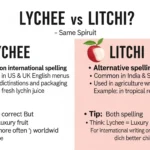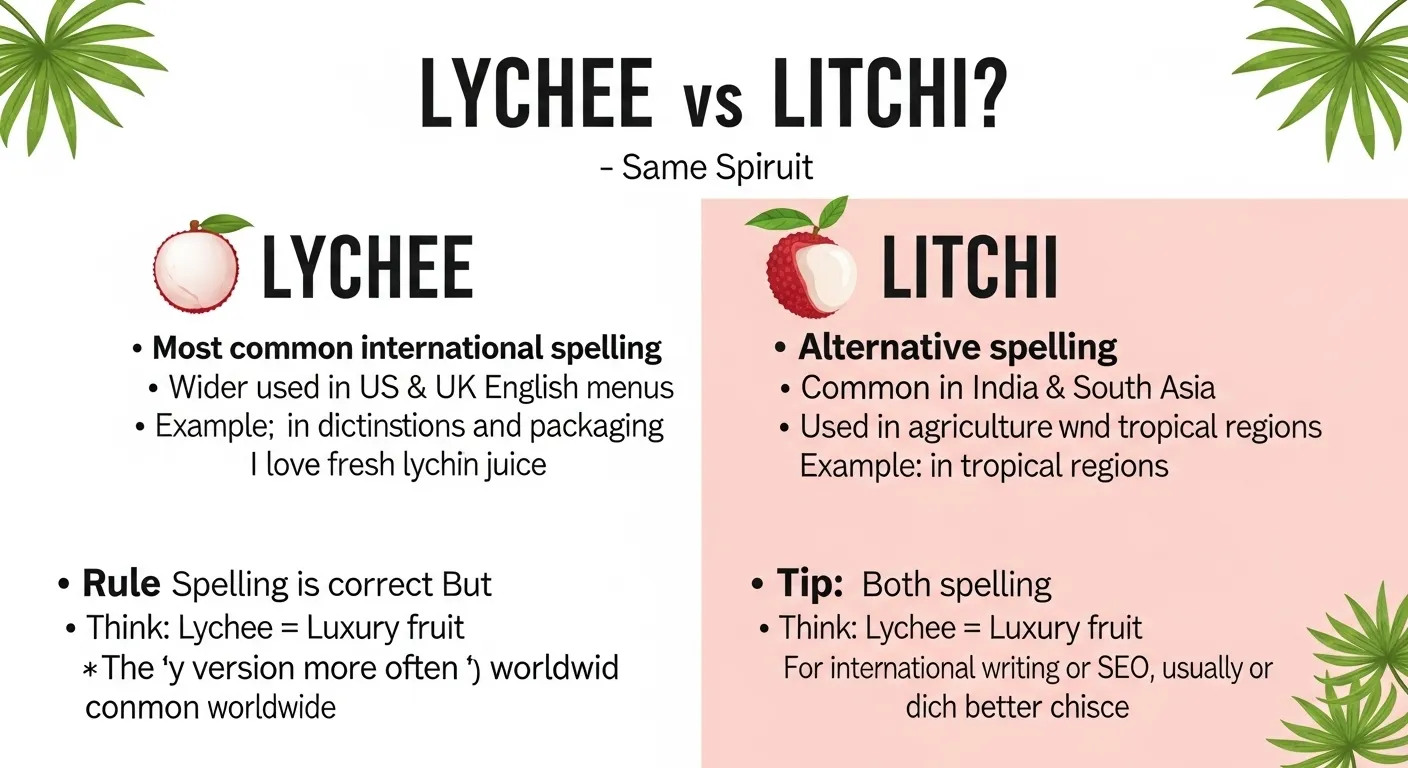
Lychee and litchi refer to the same tropical fruit; the difference is only in spelling.
I remember the first time I saw these two words while reading about tropical fruits online. One article used lychee, while another used litchi. For a moment, I thought they were two different fruits. That confusion made me search for the correct spelling.
Many people do the same when they see these words in recipes, grocery stores, or travel blogs.
The truth is simple: both spellings refer to the same sweet fruit from Asia. The difference mainly comes from transliteration and regional spelling preferences.
Lychee or Litchi : Quick Answer
Lychee = a tropical fruit with a rough red shell and sweet white flesh inside.
Litchi = another spelling of the same fruit.
Both words describe the fruit from the tree scientifically known as Litchi chinensis.
Examples
- I added fresh lychee to the fruit salad.
- The market sells juicy litchi during summer.
Both spellings are correct, but lychee is more common in modern English.
The Origin of Lychee or Litchi
The fruit comes from southern China and has been cultivated there for more than two thousand years. The name comes from Chinese pronunciation. When the fruit became known in English-speaking countries, writers tried to convert the Chinese sound into English spelling.
Because Chinese words were translated using different systems over time, several spellings appeared:
- Litchi
- Lychee
- Lichi
- Leechee
Over time, English usage settled mainly on lychee and litchi.
The scientific name of the fruit is Litchi chinensis, which explains why the spelling litchi still appears in botanical writing.
British English vs American English Spelling
Unlike many spelling differences, this one is not strictly divided between British and American English. Both regions recognize lychee and litchi, but their popularity differs.
| Feature | Lychee | Litchi |
| Meaning | Tropical fruit | Same fruit |
| Popular in media | Very common | Less common |
| Scientific use | Less common | More common |
| Grocery labels | Usually used | Sometimes used |
| US usage | Very common | Rare |
| UK usage | Common | Sometimes used |
In general, lychee appears more often in modern food writing, recipes, and supermarkets.
Which Spelling Should You Use?
Most writers prefer lychee today.
Here is a simple guideline:
Use lychee when writing:
- Recipes
- Food blogs
- Travel articles
- Restaurant menus
- Everyday writing
Use litchi when writing:
- Scientific or botanical texts
- Agricultural research
- Older publications
For most readers, lychee feels more familiar and easier to recognize.
Common Mistakes with Lychee or Litchi
1. Thinking They Are Different Fruits
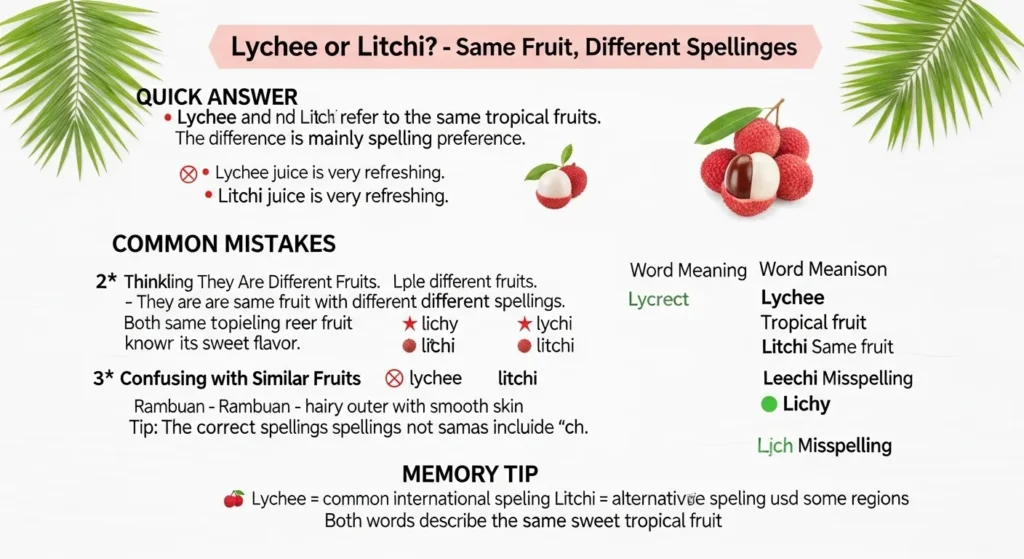
Some people believe lychee and litchi are different varieties.
❌ Lychee and litchi are different fruits.
✅ They are the same fruit.
2. Misspelling the Word
Common spelling errors include:
❌ leechi
❌ lichy
❌ lychi
Correct forms:
✅ lychee
✅ litchi
3. Confusing with Similar Fruits
Lychee is sometimes confused with:
- Rambutan
- Longan
These fruits look similar but are different species.
Lychee or Litchi in Everyday Examples
In Recipes
- Add peeled lychee to desserts or fruit salads.
- Fresh litchi juice is popular in summer drinks.
In Grocery Stores
- The store sells canned lychees.
- Local farms grow sweet litchi in warm climates.
Travel Writing
- Thailand is famous for its fresh lychee.
- India produces large quantities of litchi each year.
In Social Media
- Just tried fresh lychee for the first time!
- These litchis are incredibly sweet.
Both spellings appear online, but lychee is far more common in modern usage.
Litchi or Lychee: Usage Trends
Language trends show a clear pattern.
Lychee appears much more often in:
- recipes
- restaurant menus
- food blogs
- grocery packaging
The spelling litchi is still used, especially in scientific names and agricultural contexts.
Countries that grow the fruit often use litchi, including:
- India
- China
- Bangladesh
Meanwhile, global food media mostly prefers lychee.
Comparison Table: Lychee vs Litchi
| Feature | Lychee | Litchi |
| Meaning | Tropical fruit | Same fruit |
| Modern popularity | High | Lower |
| Used in recipes | Yes | Sometimes |
| Scientific spelling | Rare | Common |
| Grocery labels | Common | Less common |
| Pronunciation | Same | Same |
Both words are pronounced the same: LEE-chee.
Frequently Asked Questions (FAQs)
1. Is lychee the same as litchi?
Yes. They refer to the same fruit.
2. Which spelling is more common?
Lychee is more common in modern English.
3. Is litchi incorrect?
No. It is a correct alternative spelling.
4. Why are there two spellings?
The word came from Chinese and was transliterated into English in different ways.
5. Which spelling appears in scientific names?
The scientific name is Litchi chinensis, so scientific texts often use litchi.
6. Which spelling should I use in recipes?
Most recipes use lychee.
7. Do they have different pronunciations?
No. Both are pronounced the same.
Conclusion
Lychee and litchi are simply two spellings of the same tropical fruit. The fruit itself is known for its red rough skin, juicy white flesh, and sweet floral flavor. The spelling difference developed because Chinese words were translated into English using different systems over time.
Today, lychee is the spelling most people recognize. It appears more often in recipes, grocery stores, restaurant menus, and travel writing. On the other hand, litchi still appears in scientific names and agricultural contexts, which explains why it remains in use.
If your goal is clear and modern writing, lychee is usually the best choice. Readers recognize it easily, and it is widely used in everyday English. However, knowing that litchi is also correct can help you understand older texts, scientific articles, or regional usage.
Once you remember that both spellings describe the same fruit, the confusion disappears completely.

I am Lynne Truss, a British writer and journalist who is best known for my work on English grammar. I have always been interested in language and punctuation, especially how small mistakes can change meaning. Through my books, I try to make grammar easy, interesting, and enjoyable for readers.