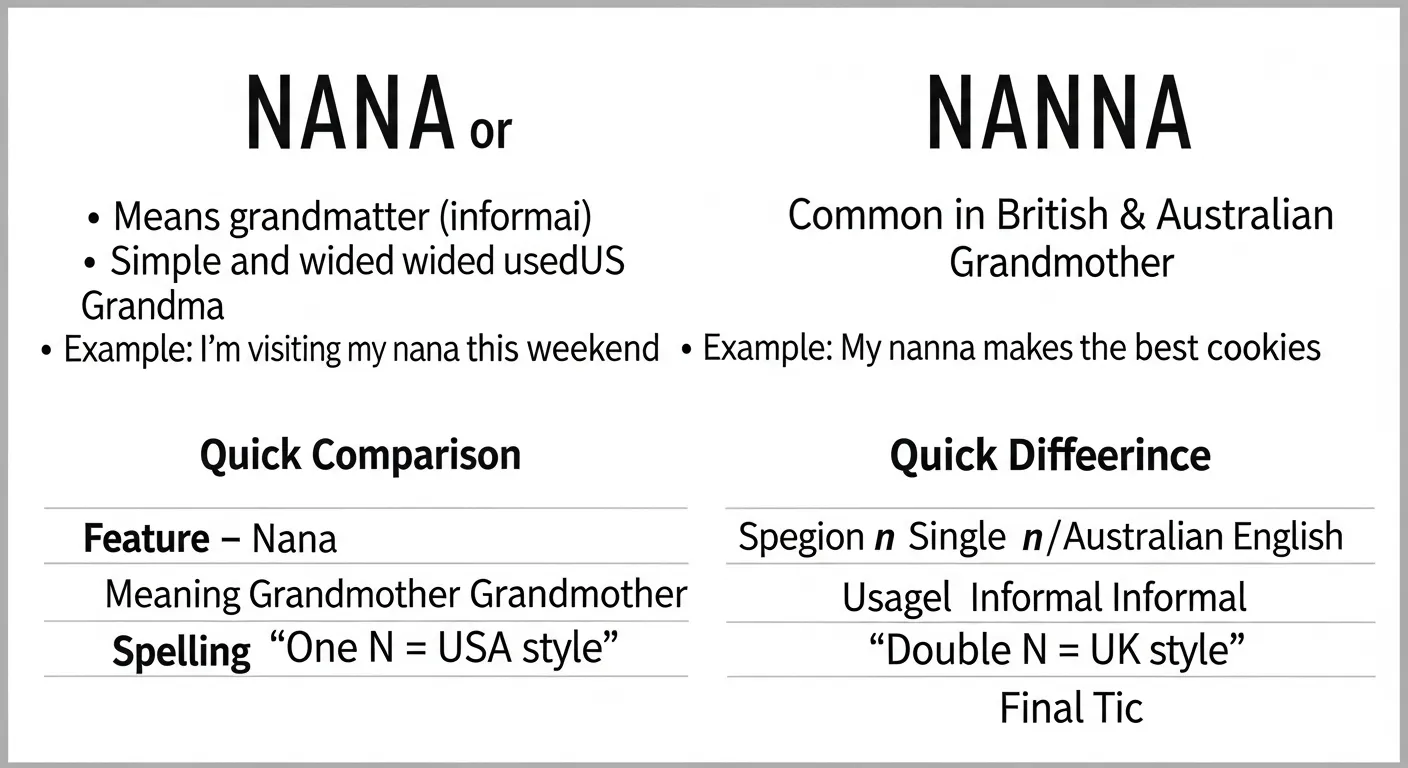
Nana and nanna both mean grandmother or an affectionate name, but usage depends on region and family preference.
I remember hearing different friends call their grandmothers “nana” and “nanna,” and I thought one of them had to be wrong.
That small confusion stayed with me until I realized both forms are correct. Many people search “nana or nanna” because the words sound the same and are used in similar ways.
The real difference is not meaning but spelling style and personal choice, which makes it simple once you understand the context.
Nana or Nanna : Quick Answer
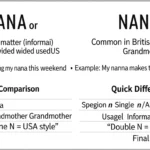
Nana = an informal name for grandmother, common in American English
Nanna = a variant spelling of grandmother, common in British and Australian English
Examples:
- I am visiting my nana this weekend.
- My nanna makes the best cookies.
Simple rule:
Nana → US style
Nanna → UK/Australian style
Meaning of Nana and Nanna
Both nana and nanna are informal, loving names for a grandmother.
Nana (Short and Common)
- Simple spelling
- Very popular in the United States
- Easy for children to say
Example:
- My nana tells great stories.
Nanna (Double “n” Style)
- Slight spelling variation
- Common in the UK and Australia
- Feels traditional in some families
Example:
- My nanna lives near the beach.
Origin of Nana or Nanna
The words nana and nanna come from baby talk. Small children often repeat simple sounds like “na na” when learning to speak.
Over time:
- Families turned these sounds into names
- Different regions chose different spellings
That is why both forms exist today with the same meaning.
Nanna or Nana : Key Differences
| Feature | Nana | Nanna |
| Meaning | Grandmother | Grandmother |
| Spelling | Single “n” | Double “n” |
| Usage | US English | UK/Australia |
| Tone | Modern/simple | Traditional feel |
Nana or Nanna : British English vs American English
| Region | Preferred Form | Example |
| United States | Nana | I love my nana. |
| United Kingdom | Nanna | I love my nanna. |
| Australia | Nanna | My nanna is kind. |
| Global | Both | Family choice matters |
Key point:
There is no difference in meaning, only spelling preference based on region or family tradition.
Which Spelling Should You Use?
Choose based on your audience:
- Use nana for American readers
- Use nanna for British or Australian readers
- Follow your family tradition first
Best advice:
There is no strict rule. The right choice is the one your family uses.
Common Mistakes with Nana or Nanna
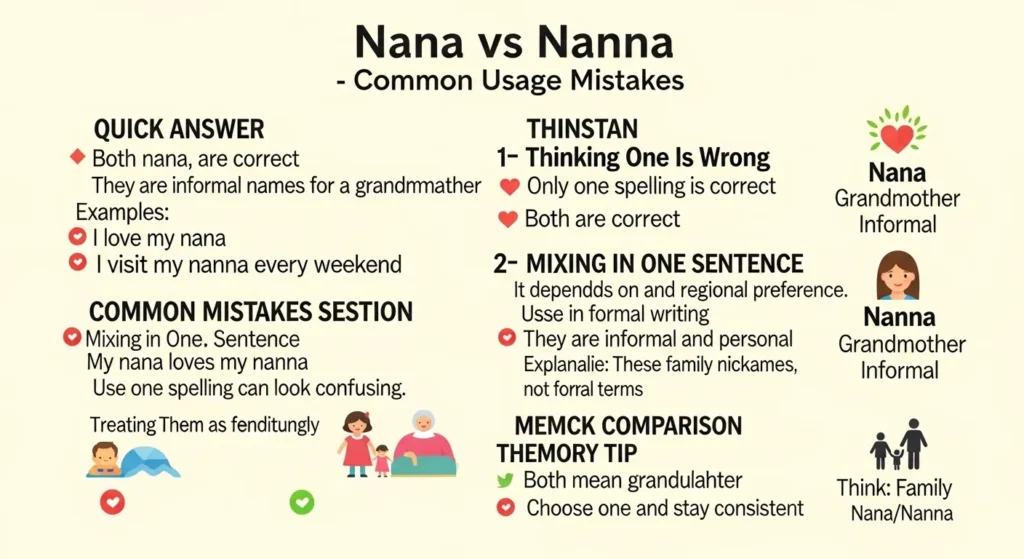
1. Thinking One Is Wrong
❌ Only one spelling is correct
✅ Both are correct
2. Mixing in One Sentence
❌ My nana loves my nanna
✅ Use one form consistently
3. Treating Them as Formal Words
❌ Use in formal writing
✅ They are informal and personal
Nana and Nanna in Everyday Examples
In Family Conversations
- I am going to my nana’s house
- My nanna called me today
Social Media
- Miss you, nana ❤️
- Happy birthday, nanna 🎉
In Cards and Messages
- Dear Nana, thank you for everything
- Love you, Nanna
In Writing
- Both are used in personal stories and memories
Nanna or Nana : Usage Insight
Why people search this:
- Same pronunciation
- Different spelling
- Confusion about correctness
General pattern:
- Nana → more common in the US
- Nanna → more common in UK and Australia
Important note:
Family usage is more important than regional rules.
Nana vs Nanna : Side by Side Comparison
| Feature | Nana | Nanna |
| Letters | 4 | 5 |
| Sound | Same | Same |
| Meaning | Same | Same |
| Difference | Spelling only | Spelling only |
Frequently Asked Questions
1. What is the difference between nana and nanna?
There is no meaning difference. Only the spelling varies.
2. Which spelling is correct?
Both are correct.
3. Is nana American?
Yes, it is more common in American English.
4. Is nanna British?
Yes, it is more common in British and Australian English.
5. Can I use both?
Yes, but not in the same sentence.
6. Which one is more popular?
Nana is more common globally, but usage depends on region.
7. Is this a formal word?
No, both are informal and used in families.
Conclusion
The difference between nana and nanna is simple and easy to remember. Both words mean the same thing: a loving, informal name for a grandmother.
The only difference is spelling. Nana is more common in American English, while nanna appears more often in British and Australian English. However, the most important factor is family preference.
These words come from early childhood speech, which is why they feel warm and personal. There is no strict rule that forces you to choose one over the other. As long as you stay consistent in your writing or speech, both forms are correct and widely accepted.
By understanding this, you can confidently use either word without confusion. In the end, the meaning stays the same, and the love behind the word matters most.

I am Mignon Fogarty, an American author and language expert also known as “Grammar Girl.”
I focus on explaining grammar rules, spelling mistakes, and confusing words in a simple and friendly way.
My goal is to make correct English easy and approachable for everyday readers.