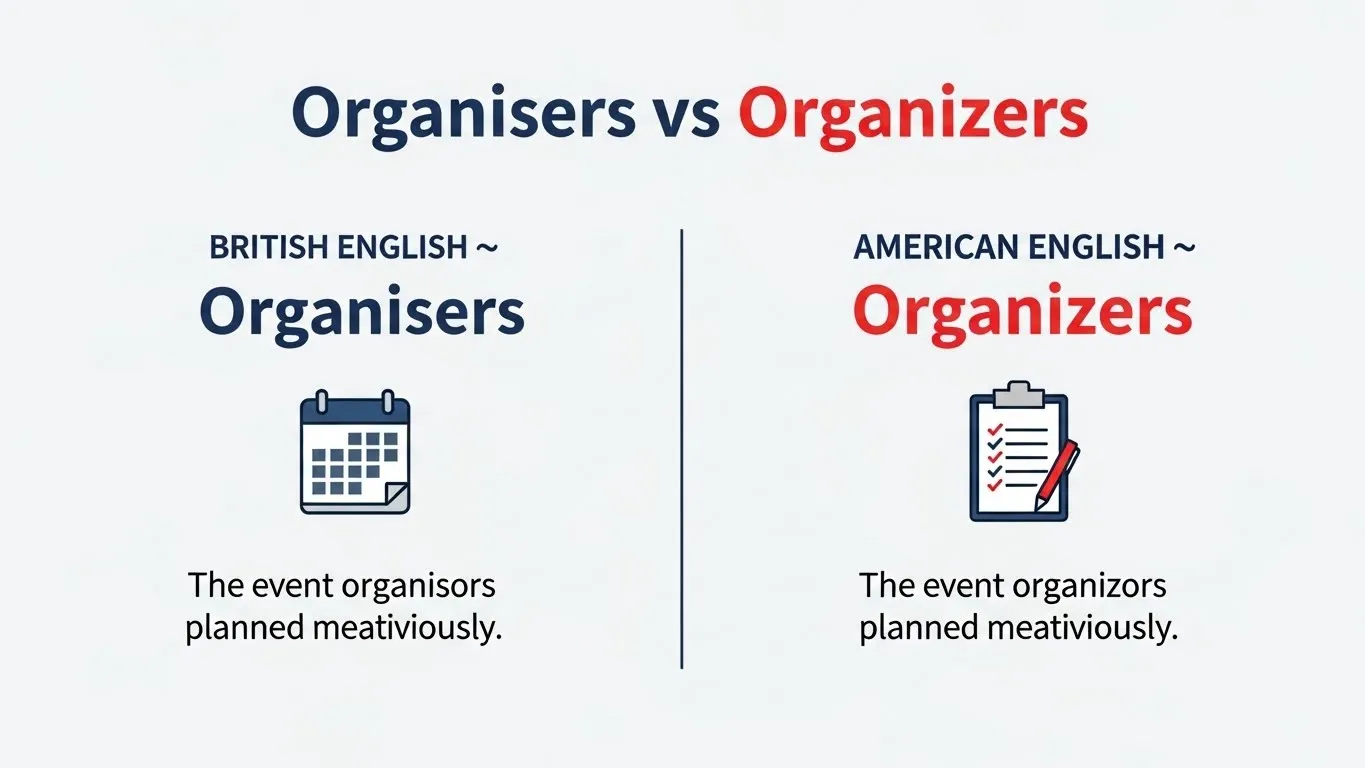
Both organisers and organizers are correct organisers is British English, while organizers is American English.
I often see people confused about organisers or organizers, and maybe you are too.
When I notice organisers on UK sites and organizers on US platforms, I understand why this feels confusing.
At first, I wondered if one spelling was wrong, but then I realized the difference comes from British and American English rules, not meaning. In this article, I clear that confusion step by step.
You’ll learn where organisers or organizers come from and how to choose organisers or organizers correctly for your audience.
Organisers or Organizers Quick Answer
Both spellings are correct, but they depend on the type of English you are using.
- Organisers → British English
- Organizers → American English
Both words mean people or tools that arrange, plan, or manage things.
Examples:
- ✅ The event organisers announced the schedule. (UK)
- ✅ The event organizers announced the schedule. (US)
The Origin of Organisers or Organizers
The word comes from the Greek organon, meaning tool or instrument. It later passed into French and then into English as organize.
When English developed into regional varieties:
- British English preferred ise / iser
- American English standardized ize / izer
This is why we have:
- organise → organize
- organiser → organizer
Both spellings share the same meaning and origin. The difference exists because of spelling conventions, not because one is more correct.
British English vs American English Spelling
This is a clear British vs American English difference.
Comparison Table
| English Variety | Preferred Spelling | Example |
| American English | Organizers | Event organizers |
| British English | Organisers | Event organisers |
| Canadian English | Organizers (mostly) | Team organizers |
| Australian English | Organisers | Conference organisers |
Which Spelling Should You Use?
Use organizers if your audience is:
- American
- US based companies or websites
- US exams or publications
Use organisers if your audience is:
- British
- Commonwealth countries
- UK exams or academic writing
For a global audience, choose one spelling style and use it consistently throughout your content.
Common Mistakes with Organisers or Organizers
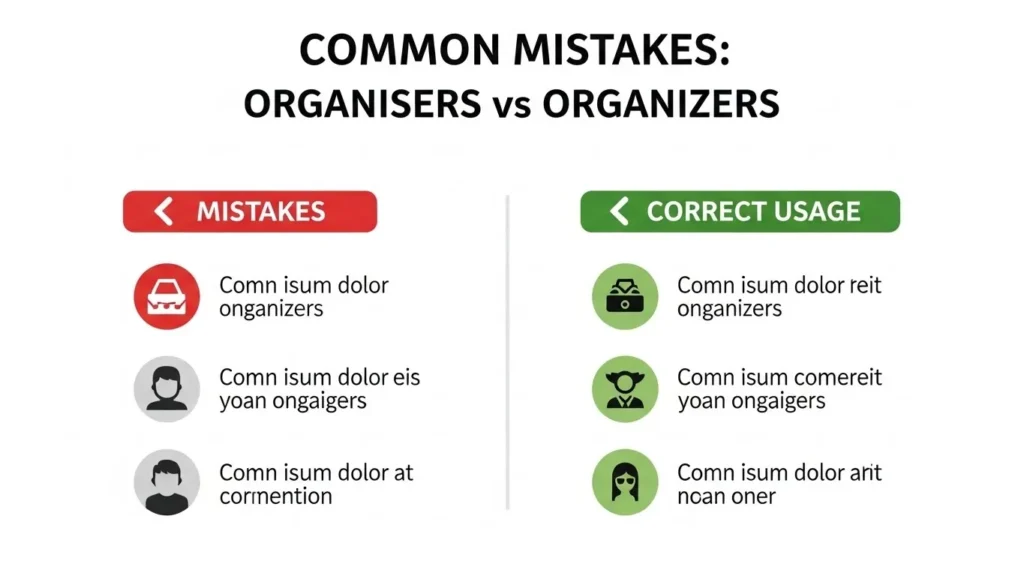
❌ Mixing both spellings in one article
Switching between organisers and organizers in the same text looks careless and unprofessional.
✅ Choose one spelling and stay consistent
Decide on British or American English before you start writing.
❌ Thinking one spelling is wrong
Many learners assume one version is incorrect, but both are standard in their regions.
✅ Both are correct in their regions
The difference is purely regional, not grammatical.
❌ Using American spelling in British exams
This can cost marks in IELTS, Cambridge, or UK university submissions.
✅ Match spelling to exam or style guide requirements Additional Tip:
If you’re unsure, check your dictionary settings, Word/Google Docs language preferences, or your company’s style guide. Consistency always matters more than which spelling you choose.
Learn More : Prepair or Prepare: Which Spelling Is Correct
Organisers or Organizers in Everyday Examples
- Emails
“The event organizers will contact you soon with final details.” (US) - News Articles
“The festival organisers confirmed the dates after months of planning.” (UK) - Social Media
“Huge thanks to the event organisers 🎉 Couldn’t have done it without you!” - Formal Writing
“The organizers coordinated the conference across multiple departments.” - Work & Productivity
“Desk organizers help keep documents, stationery, and cables tidy.” - Education
“Student organizers prepared materials for the orientation program.” - Retail & Shopping
“Closet organizers are popular tools for home organization.” - Job Titles
“She works as a community organizer for local events.”
These examples show that both spellings are used naturally in daily communication, professional settings, and product descriptions depending only on regional English preferences.
Organisers or Organizers Google Trends & Usage Data
Search trends show that:
- Organizers is searched more in the United States
- Organisers is more popular in the UK, Australia, and parts of Europe
The word is commonly searched in:
- Event planning
- Office supplies
- Productivity tools
- Job titles and resumes
Both spellings are widely accepted, with popularity depending mainly on region.
Comparison Table: Organisers vs Organizers
| Word | English Type | Meaning |
| Organisers | British English | People or tools that arrange things |
| Organizers | American English | Same meaning |
FAQs: Organisers or Organizers
1. Are organisers and organizers the same?
Yes. They have the same meaning.
2. Is organizers American English?
Yes.
3. Is organisers British English?
Yes.
4. Which spelling should I use in exams?
Use the spelling required by your exam board.
5. Can I mix both spellings?
No. Consistency is important.
6. Which spelling is better for global websites?
Either is fine, but stay consistent.
7. Do both spellings apply to people and objects?
Yes. Both can refer to people or tools.
Conclusion
The difference between organisers or organizers is a matter of regional spelling, not meaning. Organizers is the preferred spelling in American English, while organisers is standard in British and Commonwealth English.
Neither spelling is wrong. The key is knowing your audience and being consistent. Use American spelling for US readers and British spelling for UK or international academic audiences.
Mixing both in the same text can confuse readers and reduce professionalism.
Once you match the spelling to your audience, you’ll never have to second guess this word again.

I am Bryan A. Garner, an American writer and editor focused on English usage, grammar, and word choice.
I am best known for Garner’s Modern English Usage, a reference book widely used by writers, editors, and legal professionals.
My work centers on clarity, precision, and resolving confusing word comparisons in modern English.