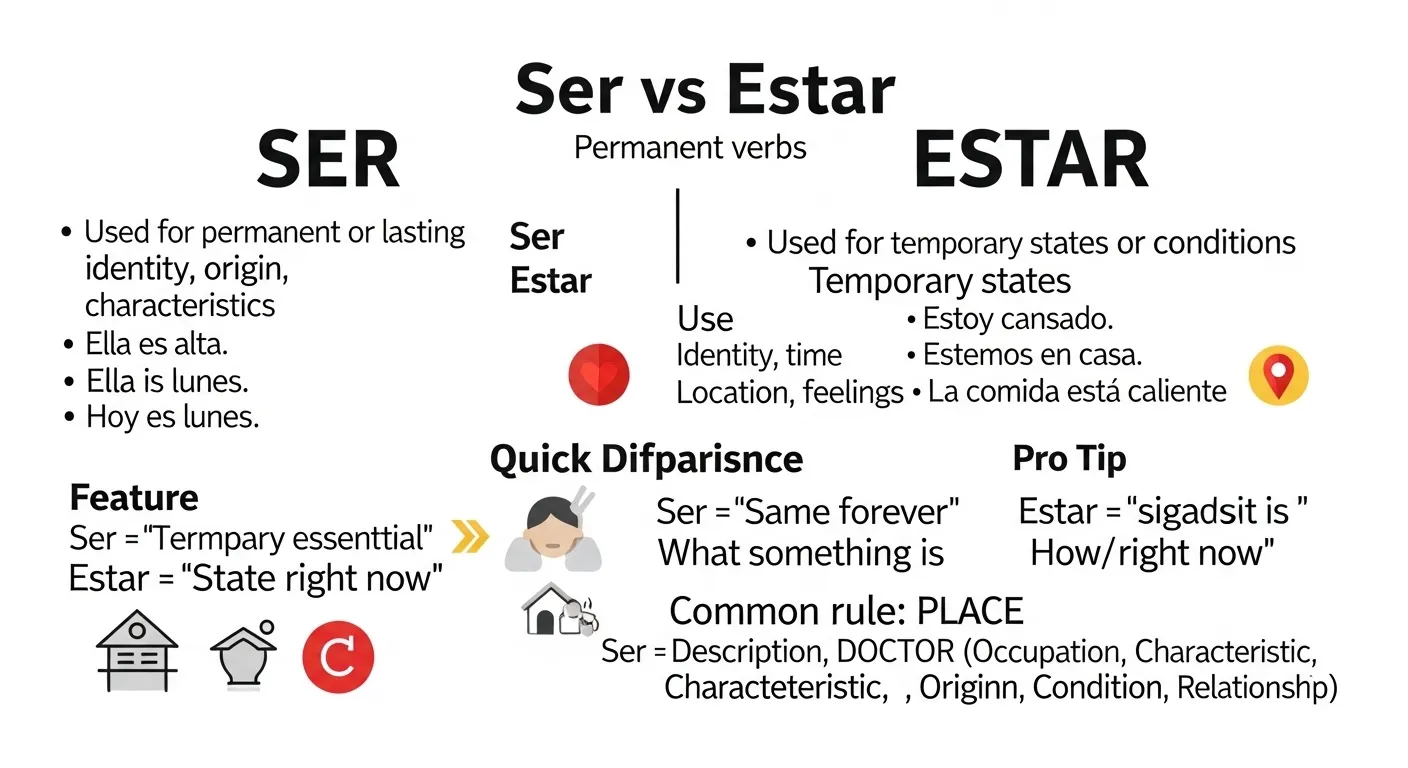
Ser is used for permanent traits, while estar is used for temporary states.
I remember the first time I tried to describe someone in Spanish and got stuck between ser and estar. Both meant “to be,” but choosing the wrong one completely changed the meaning of my sentence.
That confusion is very common for learners. Many people search “ser or estar” because both verbs look similar but follow different rules.
The good news is that once you understand the difference between permanent and temporary situations, using them correctly becomes much easier.
Ser or Estar : Quick Answer
Ser = a verb used for permanent qualities, identity, or general facts
Estar = a verb used for temporary conditions, locations, or states
Examples:
- Ella es doctora. (She is a doctor.)
- Ella está cansada. (She is tired.)
Simple rule:
Ser → permanent or defining
Estar → temporary or changing
Meaning of Ser and Estar
The difference between ser and estar comes from how long something lasts and what it describes.
Ser (Permanent or Essential)
Ser is used for identity, origin, characteristics, and general truths.
Common uses:
- Identity
- Profession
- Nationality
- Time and dates
- Characteristics
Examples:
- Él es alto. (He is tall.)
- Somos estudiantes. (We are students.)
- Hoy es lunes. (Today is Monday.)
These are things that do not change easily.
Estar (Temporary or Situational)
Estar is used for temporary conditions, emotions, and locations.
Common uses:
- Feelings
- Physical condition
- Location
- Temporary states
Examples:
- Estoy feliz. (I am happy.)
- El libro está en la mesa. (The book is on the table.)
- Estamos cansados. (We are tired.)
These situations can change.
Origin of Ser and Estar
Both verbs come from Latin but developed differently.
- Ser comes from Latin esse, meaning to exist
- Estar comes from Latin stare, meaning to stand or stay
This explains their meanings:
- Ser → essence or identity
- Estar → state or condition
Ser or Estar : Key Differences
| Feature | Ser | Estar |
| Meaning | Permanent traits | Temporary states |
| Use | Identity, facts | Feelings, location |
| Nature | Stable | Changeable |
| Example | She is kind | She is tired |
Which One Should You Use?
Choose based on the situation:
Use ser when:
- Talking about identity
- Describing permanent traits
- Giving general facts
Use estar when:
- Talking about emotions
- Describing temporary conditions
- Showing location
Quick tip:
Ask yourself:
- Is this permanent? → Ser
- Is this temporary? → Estar
Common Mistakes with Ser or Estar
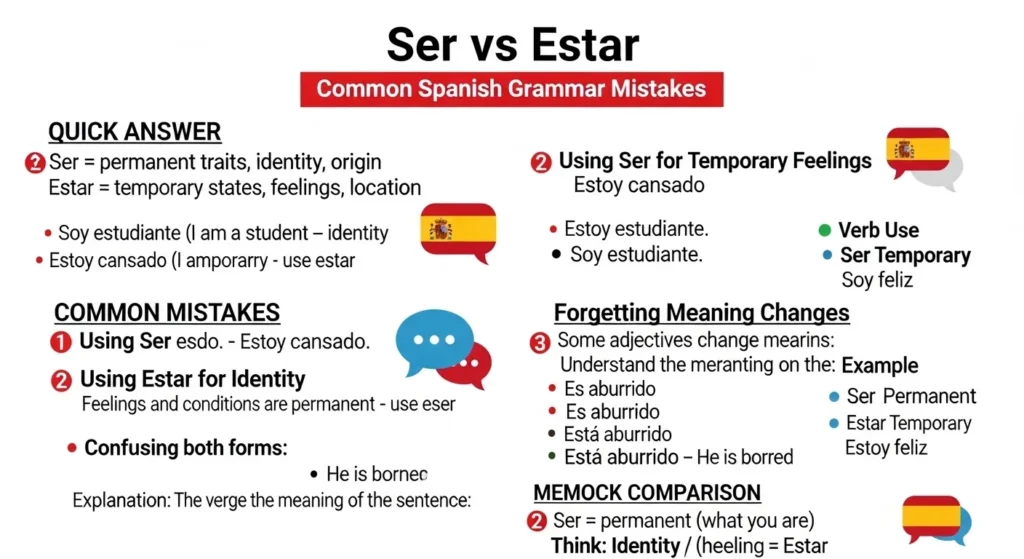
1. Using Ser for Temporary Feelings
❌ Soy cansado.
✅ Estoy cansado.
2. Using Estar for Identity
❌ Estoy estudiante.
✅ Soy estudiante.
3. Forgetting the Meaning Change
Some adjectives change meaning:
- Es aburrido → He is boring
- Está aburrido → He is bored
Ser or Estar in Everyday Examples
In Conversations
- Soy profesor. (I am a teacher.)
- Estoy ocupado. (I am busy.)
In Travel
- Madrid es una ciudad grande.
- El hotel está cerca.
Social Situations
- Ella es amable. (She is kind.)
- Ella está feliz. (She is happy.)
In Writing
- El clima es frío en invierno.
- Hoy está frío. (Today it is cold.)
Ser vs Estar : Side by Side Comparison
| Feature | Ser | Estar |
| Type | Permanent | Temporary |
| Use | Identity | Condition |
| Example | He is smart | He is tired |
| Change | Rare | Frequent |
Estar or Ser : Usage Insight
These verbs are among the most searched topics in Spanish learning because:
- Both mean “to be”
- English uses only one verb
- Spanish uses two with different meanings
General pattern:
- Ser is used more for definitions and facts
- Estar is used more in daily conversations and emotions
Understanding this helps avoid confusion.
Frequently Asked Questions
1. What is the main difference between ser and estar?
Ser is for permanent traits, while estar is for temporary states.
2. Can both mean “to be”?
Yes. Both verbs mean “to be,” but they are used differently.
3. How do I remember ser vs estar?
Think:
- Ser = permanent
- Estar = temporary
4. Do adjectives change meaning?
Yes. Some adjectives change meaning depending on the verb.
5. Is location always estar?
Yes. Location is almost always expressed with estar.
6. Which one is used more?
Both are common, but used in different contexts.
7. Why is this confusing?
Because English uses only one verb “to be,” while Spanish uses two.
Conclusion
Understanding the difference between ser and estar is essential for speaking and writing Spanish correctly. Although both verbs mean “to be,” they are used in very different ways. Ser describes permanent traits, identity, and general facts, while estar is used for temporary conditions, emotions, and locations.
The key to mastering them is to focus on the nature of the situation. If something is stable or defining, use ser. If it is temporary or changeable, use estar. This simple rule solves most confusion.
Over time, with practice and exposure, choosing the correct verb becomes natural. By learning this difference clearly, you improve both your grammar and your confidence in Spanish communication.

I am Emily Carter, a British writer and linguistics enthusiast from London.
I specialize in studying the differences between British and American English.
I enjoy exploring how language changes across cultures and regions.
Through my writing, I aim to make English learning simple and interesting for students.