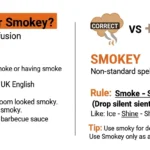
Smoky is the correct spelling for the adjective, while Smokey is usually a proper name.
I remember typing “smokey flavor” in a food review and noticing it looked slightly off. Later, I learned that “smokey” often appears as a name, not a general descriptive word.
Many people search “smoky or smokey” because both spellings appear online, especially in food blogs, brand names, and song titles. The confusion happens because English sometimes adds an extra -e, but not always.
In this guide, I will clearly explain the meaning, correct usage, and common mistakes.
Smoky or Smokey : Quick Answer
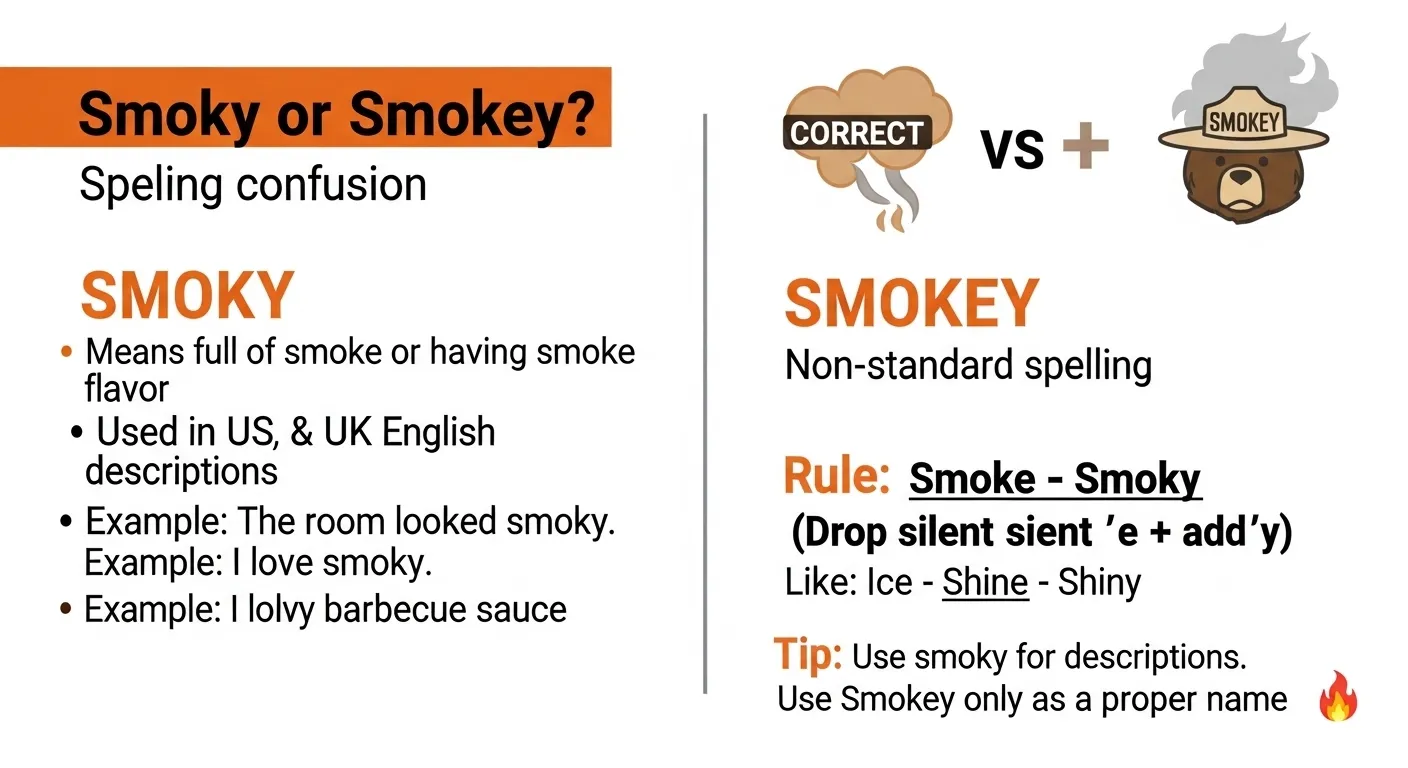
Smoky = an adjective meaning full of smoke or having a smoke-like flavor or smell.
Smokey = usually a proper noun (a name for a person, character, or brand).
Examples:
- The room felt smoky after the fire.
- The sauce has a rich, smoky taste.
- Smokey is the name of the cartoon bear.
If you are describing smell, flavor, or air quality, use smoky.
The Meaning of Smoky
Smoky describes something:
- Filled with smoke
- Having a smoke-like smell
- Having a smoke-flavored taste
Examples:
- The kitchen was smoky.
- She loves smoky barbecue ribs.
- The mountains looked smoky at sunset.
It is formed from the noun smoke + -y (adjective ending).
This follows a common pattern:
- cloud → cloudy
- wind → windy
- frost → frosty
So:
- smoke → smoky
Not “smokey.”
What Does Smokey Mean?
Smokey is usually a proper name.
It is commonly seen in:
- Names of fictional characters
- Brand names
- Song titles
- Nicknames
For example:
- Smokey Bear is a famous fire prevention mascot in the United States.
- Smokey Mountain Rain is a country music song by Ronnie Milsap.
In these cases, Smokey is capitalized because it is a name.
If you are not using it as a name, you probably need smoky.
British English vs American English Spelling
There is no regional spelling difference between British and American English here.
Both use:
- smoky as the correct adjective
- Smokey mainly as a proper noun
This is not like favorite/favourite or defense/defence. The rule is about word type, not region.
Which Spelling Should You Use?
Use smoky when describing:
- Food flavor
- Air quality
- Color or appearance
- Smell
Examples:
- The meat has a smoky flavor.
- The air became smoky after the fireworks.
- She wore smoky eye makeup.
Use Smokey only when it is:
- A person’s nickname
- A fictional character
- A brand or title
If you are unsure, ask:
Am I describing something? → Use smoky.
Am I naming someone or something? → Use Smokey.
Common Mistakes with Smoky or Smokey
1. Adding Extra “e” in Adjective Form
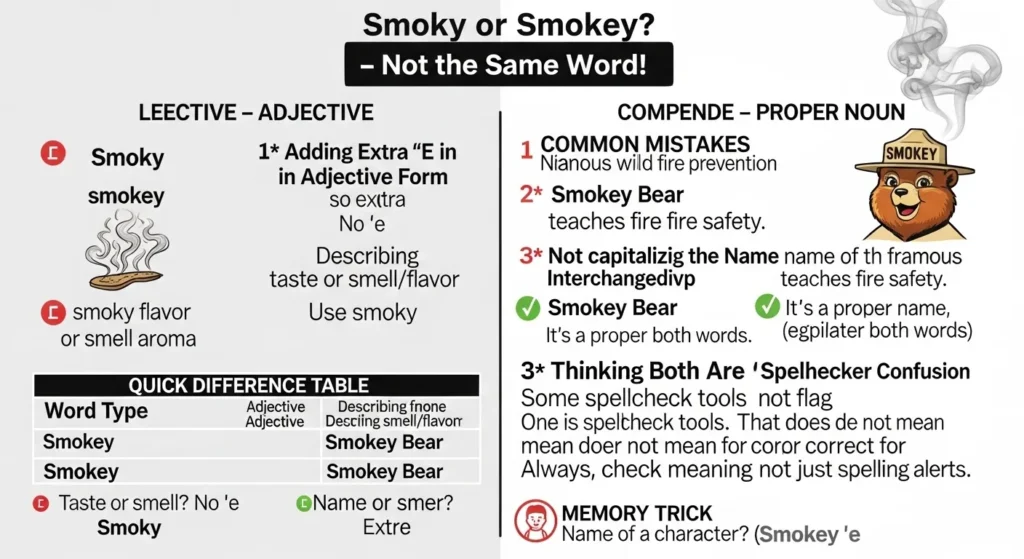
❌ smokey flavor
✅ smoky flavor
2. Not Capitalizing the Name
❌ smoky Bear
✅ Smokey Bear
3. Thinking Both Are Interchangeable
They are not. One is an adjective. The other is usually a proper noun.
4. Spellchecker Confusion
Some spellcheck tools may not flag “smokey,” but that does not mean it is correct for descriptive use.
Smoky and Smokey in Everyday Examples
In Food Reviews
- The pizza has a smoky aroma.
- The grilled chicken tastes smoky.
Weather Reports
- The sky looked smoky due to wildfires.
In Beauty Content
- She created a smoky eye look.
Pop Culture
- Smokey is a popular nickname.
- Smokey Bear promotes wildfire safety.
In normal descriptive writing, smoky is far more common.
Smokey or Smoky : Usage Trends
Search data shows that many people mistakenly type “smokey flavor” instead of “smoky flavor.”
Why?
- The base word “smoke” ends in -e, so people think the e should stay.
- Some English adjectives keep the “e,” but smoky drops it.
The correct spelling for the adjective drops the “e” before adding -y.
Rule:
If a word ends in silent e, we often drop it before adding -y.
Examples:
- shine → shiny
- haze → hazy
- smoke → smoky
Comparison Table: Smoky vs Smokey
| Feature | Smoky | Smokey |
| Word Type | Adjective | Proper noun |
| Meaning | Full of smoke / smoke-flavored | A name or title |
| Capitalized? | No | Yes |
| Used for Food? | Yes | No |
| Used as Name? | No | Yes |
The difference is about grammar role and spelling.
Frequently Asked Questions (FAQs)
1. Is smokey correct?
It is correct only as a proper name.
2. Is smoky the correct spelling for flavor?
Yes. Smoky flavor is correct.
3. Why is the “e” dropped in smoky?
English often drops a silent “e” before adding “-y.”
4. Is there a British vs American difference?
No. Both use smoky as the adjective.
5. What is Smokey Bear?
Smokey Bear is a fictional mascot promoting wildfire prevention.
6. Can smoky describe eyes?
Yes. “Smoky eyes” refers to a makeup style.
7. Which spelling is more common?
Smoky is far more common in general writing.
Conclusion
The difference between smoky and smokey is simple but important. Smoky is the correct adjective used to describe something filled with smoke or having a smoke-like flavor, smell, or appearance. Smokey is usually a proper name and is capitalized. The confusion happens because the base word “smoke” ends with an “e,” but English grammar rules require dropping that “e” before adding “-y.”
If you are describing food, air, color, or makeup, use smoky. If you are referring to a person, character, or brand name, use Smokey. Remember this rule, and you will avoid one of the most common spelling mistakes in everyday writing.

I am Mignon Fogarty, an American author and language expert also known as “Grammar Girl.”
I focus on explaining grammar rules, spelling mistakes, and confusing words in a simple and friendly way.
My goal is to make correct English easy and approachable for everyday readers.