Stayed is the past tense of “stay,” meaning remained in a place, while staid is an adjective describing someone calm, serious, or conservative.
I remember reading a sentence that said, “He has a very staid lifestyle,” and for a moment I thought it was a spelling mistake for stayed. That confusion made me look deeper into both words.
Many people search “stayed or staid” because they look similar but have completely different meanings. The confusion usually happens in writing, especially when people rely on sound instead of context.
Once you understand their meanings and roles, choosing the correct word becomes easy.
Stayed or Staid : Quick Answer
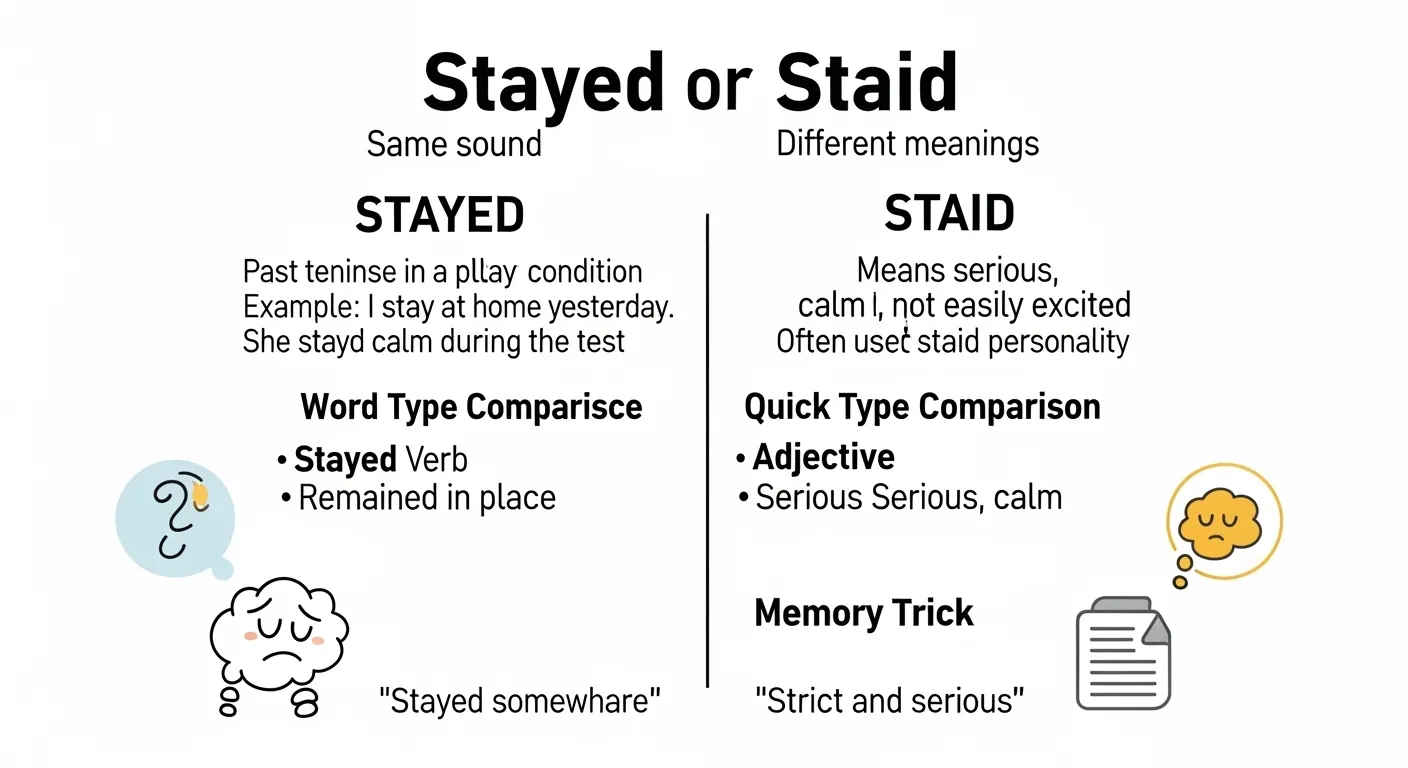
Stayed = a verb (past tense of stay) meaning remained in a place or position.
Staid = an adjective meaning calm, serious, or not easily excited.
Examples:
- She stayed at home yesterday.
- He has a staid personality.
Simple rule:
Stayed → action (remained somewhere)
Staid → description (serious or calm)
Meaning of Stayed and Staid
The difference between stayed and staid comes from their part of speech and meaning.
Stayed (Verb)
Stayed is the past tense of the verb stay, which means to remain in a place or situation.
Examples:
- We stayed at a hotel last night.
- He stayed after the meeting.
- She stayed calm during the problem.
It describes an action that already happened.
Staid (Adjective)
Staid describes someone or something that is serious, calm, or traditional in behavior.
Examples:
- He has a staid personality.
- The company has a staid image.
- Her style is simple and staid.
It is used to describe character or appearance, not an action.
Origin of Stayed and Staid
The words stayed and staid have different origins.
- Stayed comes from the verb stay, which developed from Old French and means to remain or stop.
- Staid originally came from an older form of stay but later developed a new meaning, describing someone steady, calm, or serious.
Over time, their meanings separated, which is why they are now used differently.
Stayed or Staid Grammar Rule
The easiest way to choose between stayed and staid is to check if the sentence needs a verb or an adjective.
| Word | Part of Speech | Meaning | Example |
| Stayed | Verb | Remained somewhere | We stayed home. |
| Staid | Adjective | Calm or serious | He is very staid. |
Examples:
- She stayed late at work.
- He has a staid attitude.
If the sentence shows an action, use stayed.
If it describes a person or thing, use staid.
Staid or Stayed in Everyday Examples
In Daily Life
- We stayed at home during the weekend.
- He prefers a staid lifestyle.
In Work Context
- She stayed after hours to finish the task.
- The company maintains a staid reputation.
Writing
- They stayed in the city for two days.
- The character is quiet and staid.
In Conversation
- I stayed longer than expected.
- He seems too staid for such a lively event.
Common Mistakes with Stayed or Staid
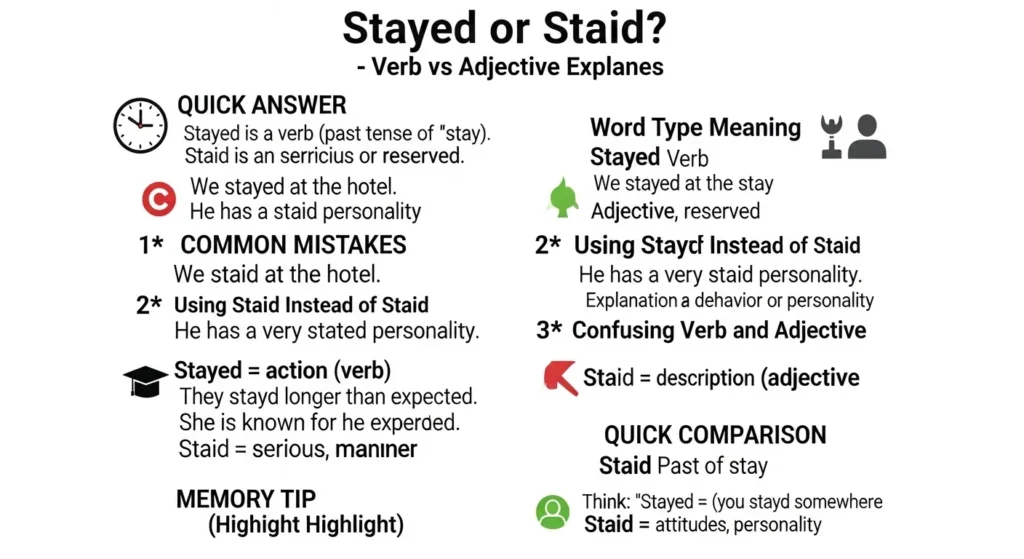
1. Using Staid Instead of Stayed
❌ We staid at the hotel.
✅ We stayed at the hotel.
2. Using Stayed Instead of Staid
❌ He has a very stayed personality.
✅ He has a very staid personality.
3. Confusing Verb and Adjective
Remember:
- Stayed = action (verb)
- Staid = description (adjective)
Stayed vs Staid : Side by Side Comparison
| Feature | Stayed | Staid |
| Part of speech | Verb | Adjective |
| Meaning | Remained in a place | Calm or serious |
| Example sentence | We stayed home. | He is very staid. |
| Usage | Actions | Descriptions |
Frequently Asked Questions
1. What is the difference between stayed and staid?
Stayed is the past tense of stay, while staid describes someone calm or serious.
2. Is staid a verb?
No. Staid is an adjective, not a verb.
Example:
- He has a staid personality.
3. Is stayed always a verb?
Yes. Stayed is a verb that shows an action in the past.
Example:
- She stayed at home yesterday.
4. Why do people confuse stayed and staid?
They look similar and sound alike, which leads to spelling mistakes in writing.
5. How can I remember the difference between stayed and staid?
Use this simple trick:
- Stayed → past action
- Staid → steady personality
Example:
- We stayed home.
- He is very staid.
6. Is staid commonly used?
Staid is less common in everyday speech but appears more in formal writing.
Conclusion
Understanding the difference between stayed and staid is simple once you focus on their roles in a sentence. Stayed is a verb and refers to an action that already happened, meaning someone remained in a place or situation. Staid, on the other hand, is an adjective used to describe someone or something as calm, serious, or traditional.
The confusion usually comes from their similar spelling and pronunciation, but their meanings are completely different. By remembering that stayed shows an action and staid describes a personality or style, you can easily choose the correct word. This small distinction helps improve clarity in writing and prevents a common grammar mistake.

I am Lynne Truss, a British writer and journalist who is best known for my work on English grammar. I have always been interested in language and punctuation, especially how small mistakes can change meaning. Through my books, I try to make grammar easy, interesting, and enjoyable for readers.