Tipi and teepee mean the same thing; the difference is spelling and cultural accuracy.
I remember seeing “teepee” in a children’s book and “tipi” in a history article. For a moment, I thought they were two different kinds of tents.
Many people search “tipi or teepee” because both spellings appear online, especially in camping blogs and school materials. The confusion is understandable, but there is an important detail behind it.
In this guide, I will explain the meaning, origin, correct usage, and which spelling is more appropriate today.
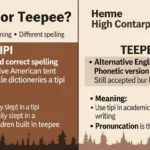
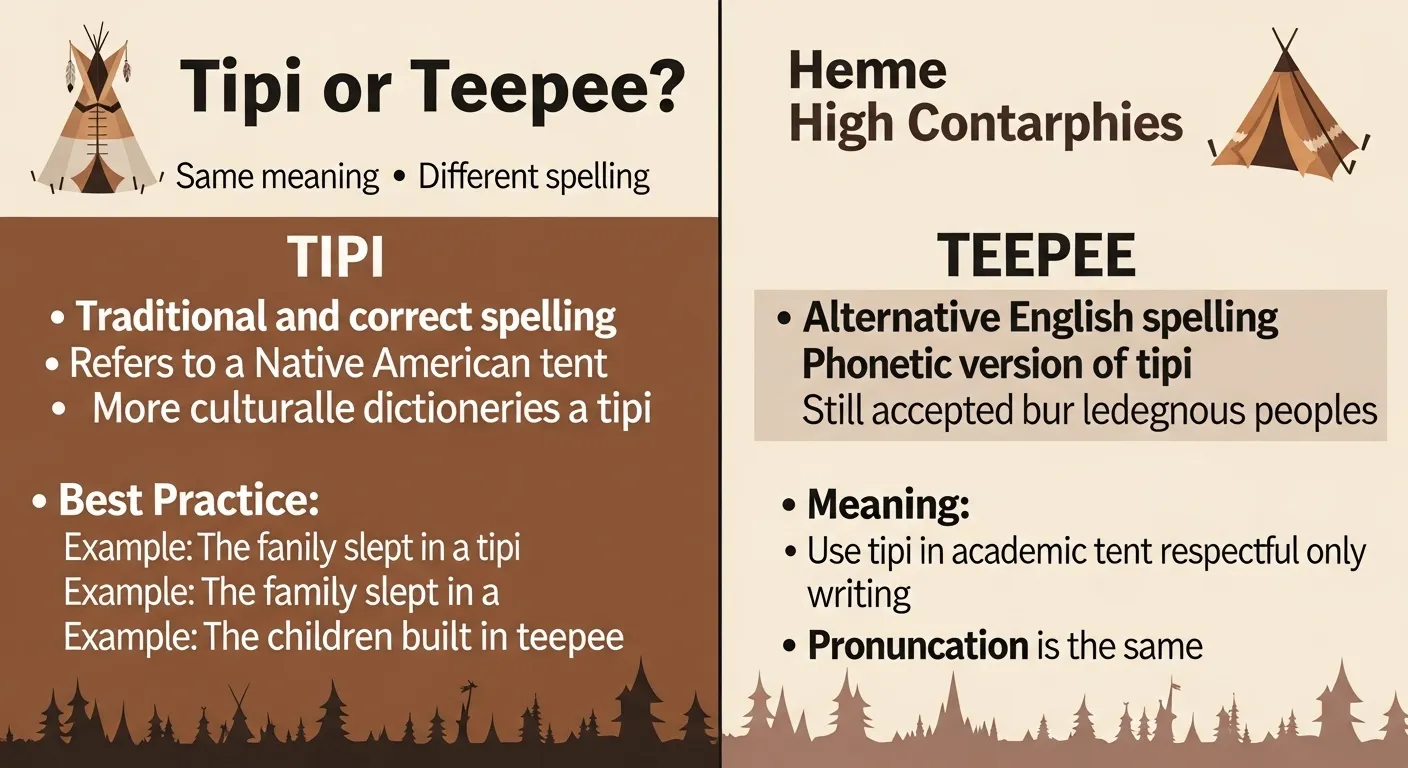
Tipi or Teepee : Quick Answer
Tipi = the traditional and culturally accurate spelling of a cone-shaped tent used by certain Indigenous peoples of North America.
Teepee = an alternative English spelling of the same word.
Both words refer to the same structure.
Examples:
- The family slept inside a tipi during the ceremony.
- Children built a small teepee for camping practice.
Both are understood, but tipi is the preferred modern and culturally respectful spelling.
The Meaning of Tipi
A tipi is a portable, cone-shaped tent traditionally made with wooden poles and animal hides.
It is historically associated with several Native American crews, especially those from the Great Plains region.
The word comes from the Lakota word thípi, meaning “dwelling” or “they dwell.”
The spelling tipi reflects the original Indigenous pronunciation more accurately than “teepee.”
Why Does Teepee Exist?
English speakers originally spelled the word the way it sounded: teepee.
Over time, scholars and cultural organizations began using tipi to better reflect the original Lakota spelling and pronunciation.
So:
- Tipi → culturally accurate and preferred
- Teepee → phonetic English version
Today, museums, educational institutions, and cultural groups usually use tipi.
Cultural Importance of the Word Tipi
A tipi is not just a tent. It has cultural and spiritual significance for many Indigenous communities.
It is especially connected such as:
- Lakota
- Sioux
For these communities, the tipi represents:
- Home and family
- Spiritual tradition
- Community gathering space
Because of this cultural importance, many people prefer the spelling tipi.
British English vs American English Usage
There is no major regional spelling difference like favorite/favourite.
Both American and British English understand:
- Tipi
- Teepee
However, modern educational and cultural writing in both regions prefers tipi.
Here is a comparison:
| Feature | Tipi | Teepee |
| Meaning | Traditional tent | Same meaning |
| Cultural Accuracy | High | Less accurate |
| Modern Preference | Yes | Less common |
| Region Difference | None | None |
Which Spelling Should You Use?
In most modern writing, you should use tipi.
Use tipi when:
- Writing academic content
- Discussing Indigenous history
- Referring to cultural traditions
- Creating educational material
You may see teepee in:
- Children’s books
- Informal writing
- Brand names
- Camping product descriptions
If your goal is respectful and accurate writing, choose tipi.
Common Mistakes with Tipi or Teepee
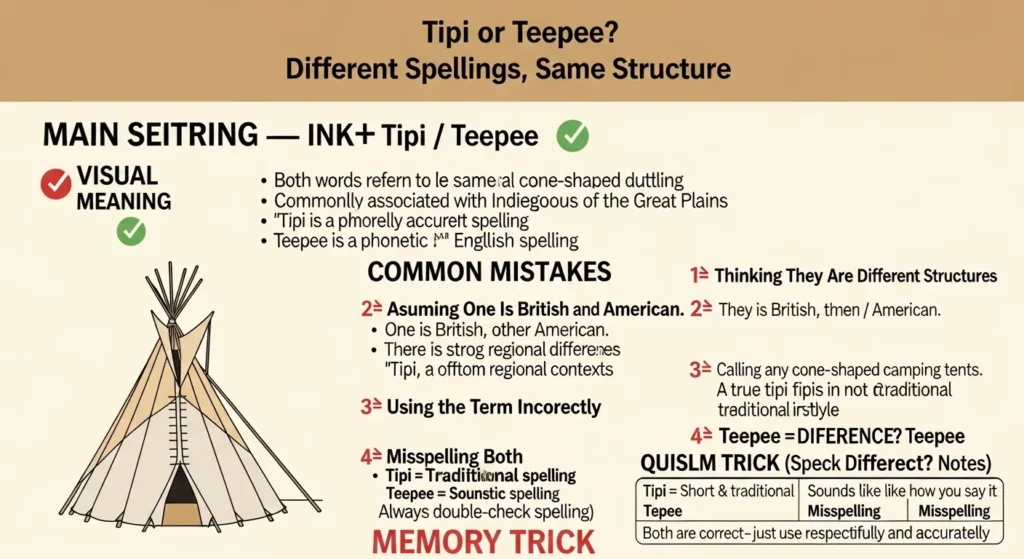
1. Thinking They Are Different Structures
❌ A tipi is different from a teepee.
✅ They refer to the same type of dwelling.
2. Assuming One Is British and One Is American
There is no strong regional difference.
3. Using the Term Incorrectly
Not every cone-shaped tent is a traditional tipi. Modern camping tents are not true tipis unless designed in that traditional style.
4. Misspelling Both
❌ tepee
❌ teapee
✅ tipi / teepee
Tipi and Teepee in Everyday Examples
In Educational Writing
- The Lakota people traditionally lived in tipis.
History Books
- The crew moved their tipis with the buffalo herds.
In Camping Blogs
- We bought a small teepee-style tent for the backyard.
On Social Media
- My kids built a tipi in the living room using blankets!
In formal and cultural discussions, tipi is strongly preferred.
Teepee or Tipi : Usage Trends
Search patterns show that both spellings are common, but tipi is increasingly used in:
- Museums
- Cultural institutions
- Academic articles
- Historical texts
The shift reflects greater awareness and respect for Indigenous language origins.
Meanwhile, teepee still appears in casual and commercial contexts.
Comparison Table: Tipi vs Teepee
| Feature | Tipi | Teepee |
| Word Origin | Lakota | English phonetic |
| Meaning | Cone-shaped dwelling | Same |
| Cultural Accuracy | Preferred | Less accurate |
| Modern Educational Use | Yes | Rare |
| Pronunciation | Same | Same |
The pronunciation is the same. Only the spelling and cultural context differ.
Frequently Asked Questions (FAQs)
1. Is tipi or teepee correct?
Both are correct, but tipi is preferred.
2. Which spelling is more respectful?
Tipi is more culturally accurate and respectful.
3. Do they mean different things?
No. They refer to the same structure.
4. Is teepee outdated?
It is not wrong, but it is less preferred in modern cultural writing.
5. How is tipi pronounced?
It is pronounced like “tee-pee.”
6. Is there a British vs American difference?
No significant regional difference exists.
7. Why do museums use tipi?
Because it better reflects the original Indigenous word.
Conclusion
The difference between tipi and teepee is mainly about spelling and cultural accuracy. Both words describe the same traditional cone-shaped dwelling used by certain Indigenous peoples of North America. However, tipi comes directly from the Lakota language and better reflects the original pronunciation and cultural heritage. Teepee developed as a phonetic English spelling.
In modern writing, especially in educational or historical contexts, tipi is the preferred and more respectful choice. While teepee is still understood and sometimes used informally, choosing tipi shows greater awareness of the word’s origin. When in doubt, use tipi for accuracy and cultural sensitivity.

I am Bryan A. Garner, an American writer and editor focused on English usage, grammar, and word choice.
I am best known for Garner’s Modern English Usage, a reference book widely used by writers, editors, and legal professionals.
My work centers on clarity, precision, and resolving confusing word comparisons in modern English.