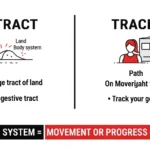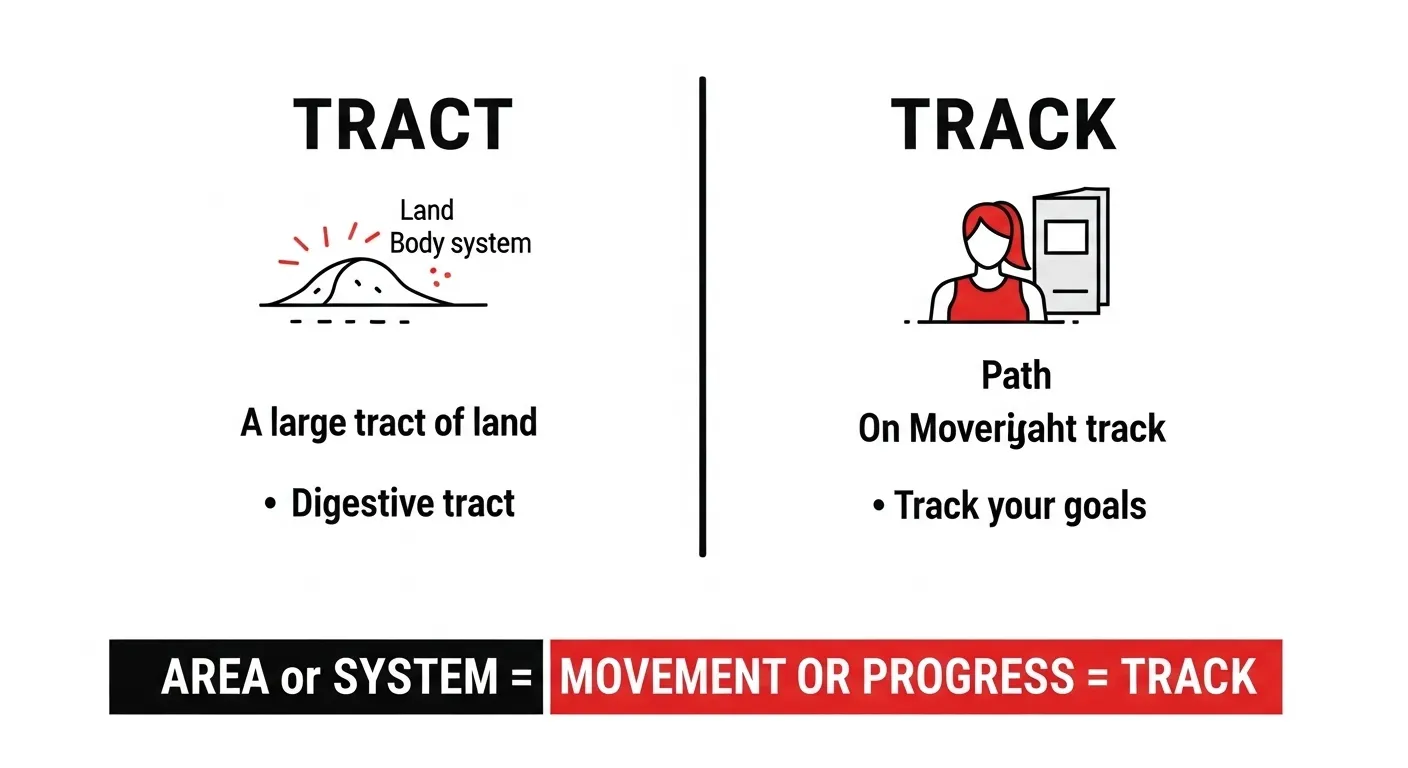
The Short answer is this: Tract refers to an area, system, or written pamphlet, while Track relates to paths, movement, or monitoring progress.
I clearly remember the first time I searched tract or track. I was writing a sentence about land development, but my mind froze. Should it be land track or land tract? Then later, while writing about progress, I faced the same confusion again.
That’s exactly why people search this keyword. These words sound similar, look close, and often appear in serious writing legal documents, education, medicine, and daily conversation.
At first, I thought it was just a spelling issue. Then I realized the truth: these words serve completely different purposes. Once I understood that, the confusion vanished.
In this guide, I’ll break it down clearly so you never mix them up again.
Tract or Track: Quick Answer
Tract refers to a defined area, system, or written text, while track refers to a path, movement, or process of following progress.
Simple examples:
- They bought a large tract of land.
- The police followed the track of the suspect.
If you mean area, system, or document, use tract.
If you mean path, movement, or progress, use track.
They are not interchangeable.
The Origin of Tract or Track
Understanding the origins makes the difference easier to remember.
- Tract comes from the Latin word tractus, meaning drawing, pulling, or region.
Over time, English adopted it to mean a defined area, a body system, or a short written pamphlet. - Track comes from Old French trac, meaning a path or trail.
It evolved into a word that describes routes, marks, movement, and progress.
Even though they sound similar, they come from different linguistic paths, which explains their different meanings.
British English vs American English Spelling
Here’s an important point that clears up another layer of confusion:
👉 There is no British vs American spelling difference between tract and track.
Both British and American English:
- Spell tract the same way
- Spell track the same way
- Use them with the same meanings
Comparison Table
| Word | Meaning | UK Spelling | US Spelling |
| Tract | Area, system, or pamphlet | Tract | Tract |
| Track | Path or progress | Track | Track |
Any confusion comes from pronunciation and usage not regional spelling.
Which Spelling Should You Use?
The correct word depends entirely on context.
Use tract when:
- Referring to land or property
- Talking about anatomy or biology
- Mentioning religious or political pamphlets
Examples:
- A large tract of farmland was sold.
- The digestive tract processes food.
- He distributed religious tracts.
Use track when:
- Referring to movement or direction
- Talking about sports or racing
- Describing monitoring or progress
Examples:
- The runners stayed on the track.
- We are tracking expenses carefully.
- The storm track changed suddenly.
Professional guidance:
- Legal, medical, academic writing → tract
- Sports, technology, daily use → track
Using the wrong word can weaken clarity and professionalism.
Common Mistakes with Tract or Track
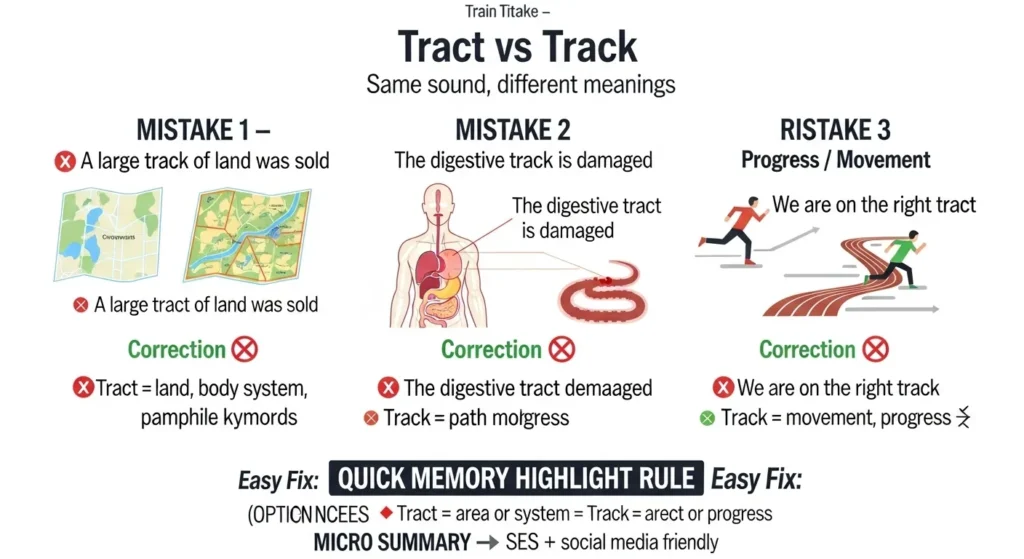
Let’s clear up frequent errors.
❌ Mistake 1:
A large track of land was sold.
✅ Correction:
A large tract of land was sold.
❌ Mistake 2:
The respiratory track is affected.
✅ Correction:
The respiratory tract is affected.
❌ Mistake 3:
He handed out political tracks.
✅ Correction:
He handed out political tracts.
Tract or Track in Everyday Examples
Emails
- Please review the land tract documents.
- We are tracking project milestones.
News
- A new housing tract was approved.
- Authorities continue to track the suspect.
Social Media
- Bought a beautiful tract of land today.
- Back on track with my fitness goals 💪
Formal Writing
- The intestinal tract plays a key role in digestion.
- Progress was tracked using monthly reports.
Tract or Track: Google Trends & Usage Data
Search behavior shows a clear pattern:
- Tract is searched mainly in:
- Real estate
- Medical education
- Legal and academic writing
- Track dominates searches related to:
- Sports
- Fitness
- Technology
- Productivity
By country:
- Searches appear consistently across the US, UK, Canada, Australia, and South Asia.
- Students and professionals account for most confusion-related searches.
This confirms that people confuse these words due to similar sound, not meaning.
Tract vs Track: Comparison Table
| Feature | Tract | Track |
| Part of speech | Noun | Noun / Verb |
| Meaning | Area, system, or pamphlet | Path, movement, monitoring |
| Common fields | Medicine, land, religion | Sports, tech, daily use |
| Action-based | ❌ No | ✔ Yes |
| Interchangeable | ❌ No | ❌ No |
FAQs: Tract or Track
1. Is tract only used for land?
No. It is also used in medicine and for pamphlets.
2. Is track a verb?
Yes. Track can be both a noun and a verb.
3. Can track refer to data?
Yes. You can track progress, data, or performance.
4. Is tract used in anatomy?
Yes. Digestive tract and respiratory tract are common terms.
5. Why do tract and track sound similar?
Pronunciation evolved over time, creating near-homophones.
6. Which one is more common?
Track is more common in daily language. Tract is more specialized.
7. How can I remember the difference?
Tract = territory or system. Track = trail or progress.
Conclusion
The confusion between tract or track disappears once you focus on meaning instead of sound. Tract is about defined areas, systems, or written texts.
It’s common in real estate, medicine, and formal contexts. Track is about movement, direction, and progress. It follows action, motion, and monitoring. I used to pause every time these words appeared in my writing, worried about choosing the wrong one.
But one simple rule fixed it: if it moves or follows progress, it’s track; if it’s an area or system, it’s tract. Mastering this difference improves clarity and credibility instantly. Whether you’re writing professionally or casually, choosing the right word ensures your message stays clear and confident.

I am Mignon Fogarty, an American author and language expert also known as “Grammar Girl.”
I focus on explaining grammar rules, spelling mistakes, and confusing words in a simple and friendly way.
My goal is to make correct English easy and approachable for everyday readers.