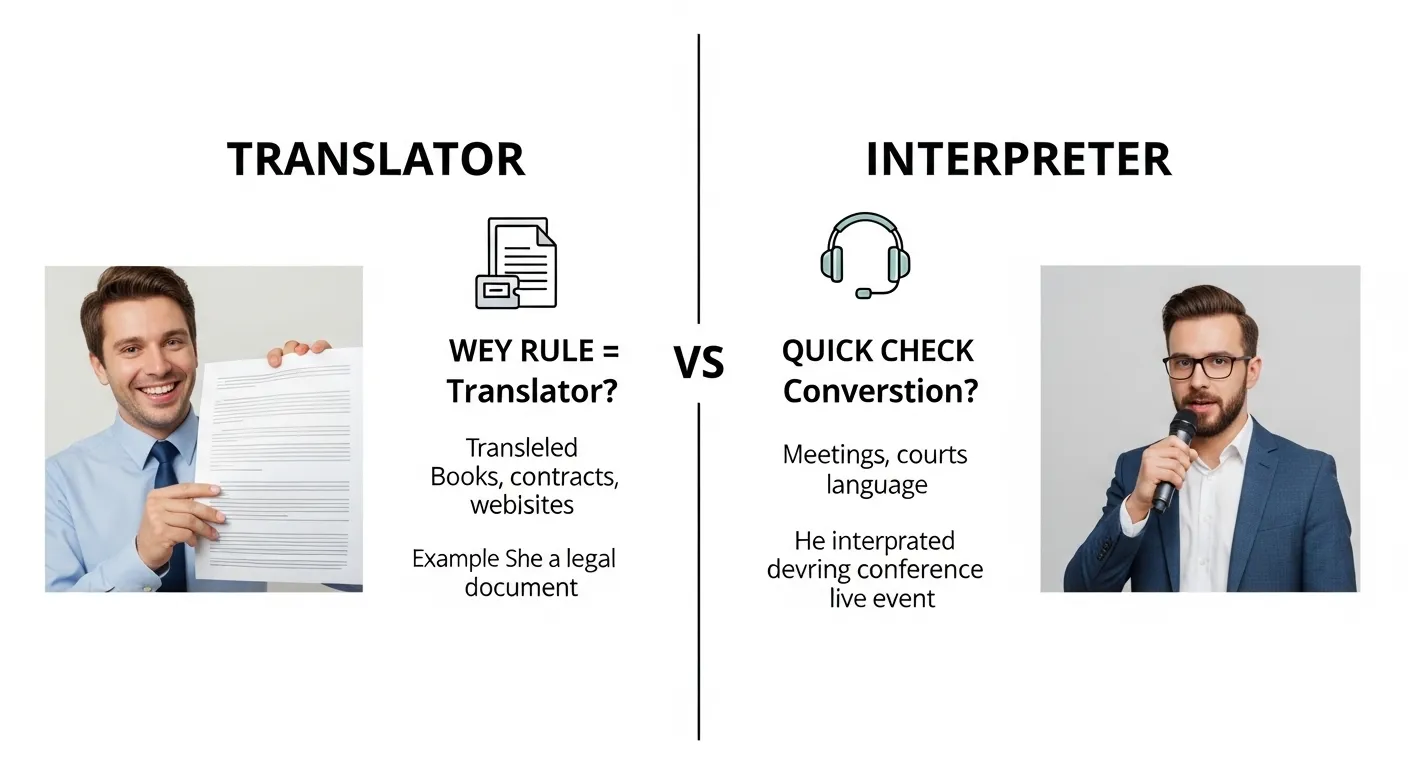
The short answer: a translator works with written language, while an interpreter works with spoken language.
Translator or interpreter confused me the first time I helped a client with a foreign document. I told them, “I’ll find an interpreter,” but they corrected me and said they needed someone to translate a file, not a conversation. That moment made me realize why so many people search translator or interpreter.
The words sound similar and both deal with languages, but they are not the same job. Students, businesses, and professionals want the right service but fear using the wrong term.
This article clears that confusion and shows exactly when to use translator and when to use interpreter.
Translator or Interpreter : Quick Answer
- Translator → Converts written text from one language to another
- Interpreter → Converts spoken language in real time
Examples:
✅ She is a translator who works on legal documents.
✅ He is an interpreter at international conferences.
Simple Rule:
👉 Writing = translator
👉 Speaking = interpreter
The Origin of Translator or Interpreter
The word translator comes from Latin transferre, meaning “to carry across.” It refers to moving written meaning from one language to another.
The word interpreter comes from Latin interpretari, meaning “to explain or clarify.” This fits spoken communication, where meaning must be explained instantly.
The confusion exists because:
- Both jobs deal with languages
- People use them loosely in conversation
- Many think they are interchangeable
Knowing the origin helps you remember their different roles.
British English vs American English Usage
There is no spelling difference between British and American English for translator or interpreter. The meaning is the same in both.
Comparison Table of Interpreter vs Translator
| Term | Role | UK English | US English |
| translator | written language | ✅ Same | ✅ Same |
| interpreter | spoken language | ✅ Same | ✅ Same |
This is a usage difference, not a spelling one.
Which Term Should You Use?
Choose based on how the language is used.
Audience-Based Advice
- Written documents → Translator
- Meetings or speeches → Interpreter
- Global audience → Be precise and clear
Quick Tip:
Ask yourself one question: Is this spoken or written?
Common Mistakes with Translator or Interpreter
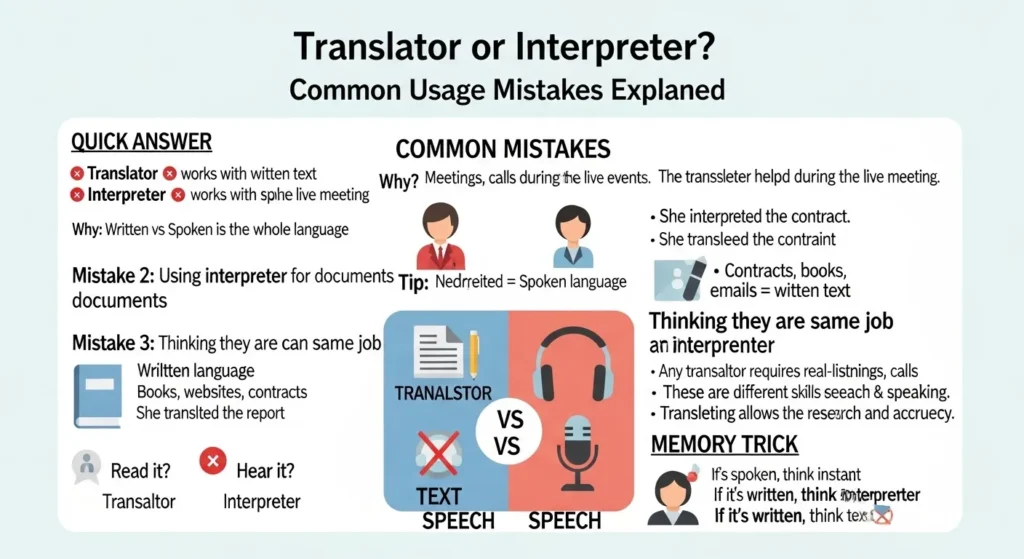
Mistake 1: Using translator for spoken events
❌ The translator helped during the live meeting.
✅ The interpreter helped during the live meeting.
Mistake 2: Using interpreter for documents
❌ She interpreted the contract.
✅ She translated the contract.
Mistake 3: Thinking they are the same job
❌ Any translator can interpret.
✅ These are different skills and training.
Interpreter or Translator in Everyday Examples
Emails
- We need a translator for the user manual.
- Please book an interpreter for tomorrow’s call.
News
- The court hired a certified interpreter.
- The novel was translated by a professional translator.
Social Media
- Looking for a freelance translator 📄
- Big events need skilled interpreters 🎧
Formal Writing
- The translator ensured accuracy in the report.
- An interpreter assisted during negotiations.
Translator and Interpreter : Google Trends & Usage Data
Search data shows translator or interpreter is commonly searched in:
- United States
- United Kingdom
- Canada
- Australia
- India
Why people search this keyword:
- Businesses hire language professionals
- Students study language careers
- Events require clear communication
Usage Insight:
- Translator appears more in publishing and business
- Interpreter appears more in courts, hospitals, and conferences
Translator vs Interpreter – Side-by-Side Comparison
| Term | Type | Works With | Speed | Example |
| translator | profession | written text | not real-time | Book translation |
| interpreter | profession | spoken words | real-time | Live meeting |
FAQs: Translator or Interpreter
1. Is a translator the same as an interpreter?
No. One works with writing, the other with speech.
2. Can one person do both jobs?
Yes, but they require different skills.
3. Which job is harder?
Both are challenging in different ways.
4. Do interpreters translate word-for-word?
No. They focus on meaning, not exact words.
5. Is translation always written?
Yes. Translation deals with text only.
6. Are interpreters used in courts?
Yes. Courts rely heavily on interpreters.
7. Which term should I use in job ads?
Use the exact role you need to avoid confusion.
Conclusion
The difference between translator or interpreter is simple once you see it clearly. A translator works with written text, while an interpreter works with spoken language. Mixing these terms can cause confusion, especially in professional settings where accuracy matters.
I’ve learned that choosing the right word saves time and avoids misunderstandings. Whether you are hiring language support, studying careers, or writing content, using the correct term shows clarity and professionalism.
This rule stays the same in British and American English, which makes it easy to remember. Once you connect translator with writing and interpreter with speaking, this confusion disappears for good.

I am Emily Carter, a British writer and linguistics enthusiast from London.
I specialize in studying the differences between British and American English.
I enjoy exploring how language changes across cultures and regions.
Through my writing, I aim to make English learning simple and interesting for students.