The quick answer is simple: wreaks means “causes” or “inflicts,” while reeks means “smells strongly.”
I still remember the first time I paused while writing an email and thought, “Is it wreaks havoc or reeks havoc?” Both looked right. Both sounded similar.
And honestly, autocorrect didn’t help much either. That confusion pushed me to search “wreaks or reeks”, just like you might be doing now. Many people search this keyword because these words sound alike but mean very different things.
Once I understood the difference, everything clicked. In this guide, I’ll clear that confusion step by step, with simple examples and practical advice you can use instantly.
Wreaks or Reeks: Quick Answer
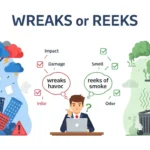
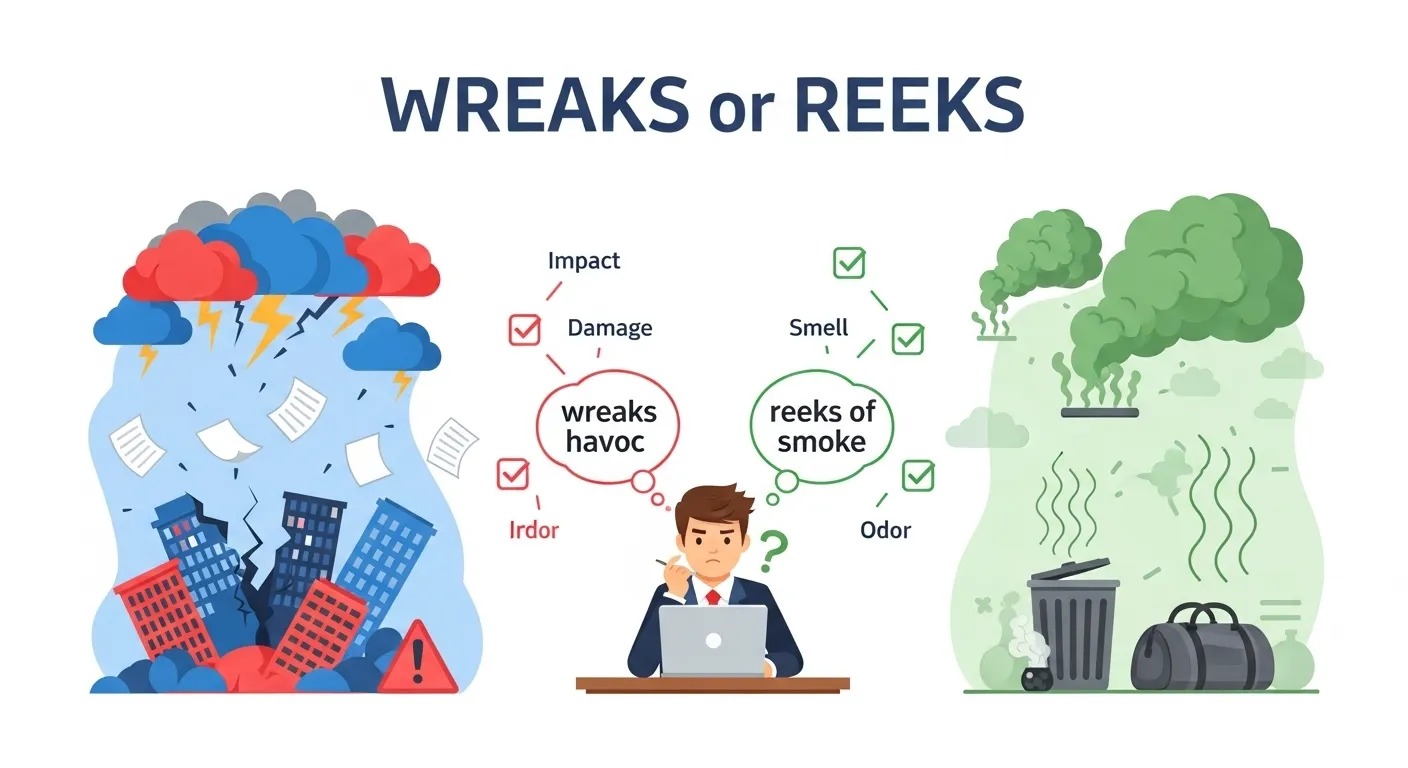
Wreaks means to cause damage, harm, or strong effects.
Reeks means to give off a strong, unpleasant smell.
Examples:
- ✔ The storm wreaks havoc on the city.
- ✔ The room reeks of smoke.
If you are talking about damage or impact, use wreaks.
If you are talking about smell, use reeks.
The Origin of Wreaks or Reeks
Understanding word origins makes the difference clearer.
Wreaks comes from Old English wrecan, meaning to drive out, avenge, or punish. Over time, it evolved to describe causing harm or strong consequences. That’s why we say wreak havoc, wreak destruction, or wreak revenge.
Reeks comes from Old English reocan, meaning to emit smoke or vapor. This meaning stayed close to its roots and now refers to strong or unpleasant smells.
The confusion exists because:
- They sound similar
- Both are verbs
- Both are commonly used in dramatic contexts
But historically and grammatically, they are completely different words.
British English vs American English Spelling
Here’s an important clarification:
This is NOT a British vs American spelling issue.
Both wreaks and reeks are spelled the same in:
- British English
- American English
- Australian English
- Canadian English
The confusion is about meaning, not regional spelling.
Examples:
- UK news: “The policy wreaks economic damage.”
- US news: “The factory reeks of chemicals.”
Comparison Table
| Word | Meaning | UK English | US English |
| Wreaks | Causes harm or damage | Same | Same |
| Reeks | Smells strongly | Same | Same |
Which Spelling Should You Use?
The choice depends on what you want to say, not where you live.
- US audience → Use wreaks for damage, reeks for smell
- UK/Commonwealth audience → Same rule applies
- Global audience → Focus on meaning, not accent
Simple rule to remember:
- Damage = Wreaks
- Smell = Reeks
If you remember this one line, you’ll never mix them up again.
Common Mistakes with Wreaks or Reeks
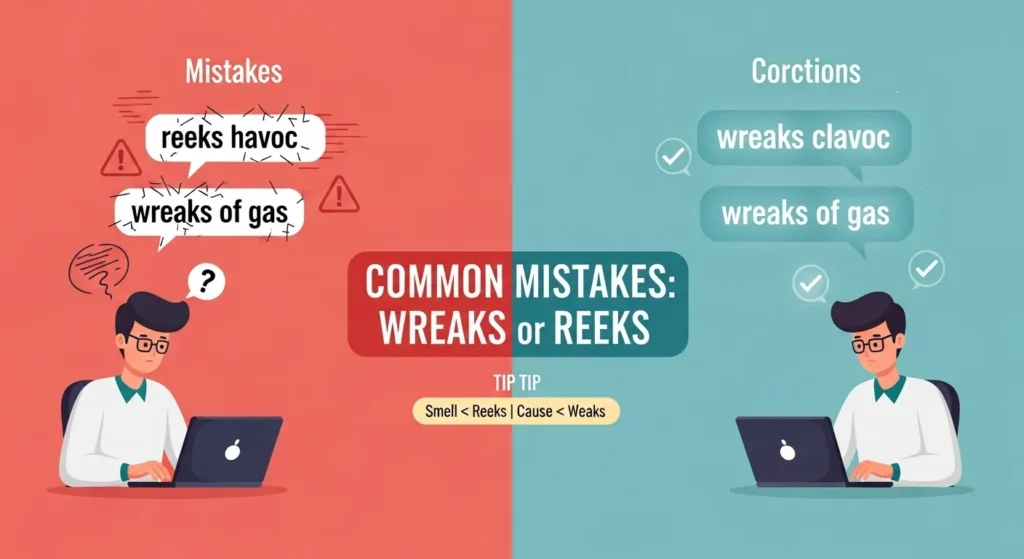
Here are the most frequent errors I see online.
❌ The decision reeks havoc on the economy.
✅ The decision wreaks havoc on the economy.
❌ The kitchen wreaks of gas.
✅ The kitchen reeks of gas.
❌ Using reeks to describe impact or damage
✅ Use wreaks for consequences and results
Quick tip:
If you can replace the word with “smells,” use reeks.
If you can replace it with “causes,” use wreaks.
Wreaks or Reeks in Everyday Examples
Emails
- “This delay wreaks serious problems for our schedule.”
- “The office reeks of paint today.”
News Headlines
- “Flooding wreaks havoc across coastal areas.”
- “Illegal dump reeks of toxic waste.”
Social Media
- “This policy wreaks chaos.”
- “My gym bag reeks after training.”
Formal Writing
- “The cyberattack wreaks long-term financial damage.”
- “The laboratory reeks of chemicals, raising safety concerns.”
Wreaks or Reeks: Google Trends & Usage Data
Search data shows that “wreaks or reeks” spikes during:
- Exam seasons
- Writing assignments
- News writing
- ESL learning periods
Usage patterns:
- Wreaks appears more in:
- News
- Academic writing
- Business reports
- Reeks appears more in:
- Casual writing
- Descriptions
- Social media
Popular regions searching this keyword:
- United States
- United Kingdom
- India
- Pakistan
- Australia
This shows the confusion is global and ongoing.
Comparison Table: Wreaks vs Reeks
| Feature | Wreaks | Reeks |
| Meaning | Causes harm | Gives off smell |
| Context | Damage, impact | Odor, scent |
| Example | Wreaks havoc | Reeks of smoke |
| Part of speech | Verb | Verb |
| Common confusion | Often mixed with reeks | Often mixed with wreaks |
FAQs: Wreaks or Reeks
1. Is it “wreaks havoc” or “reeks havoc”?
Wreaks havoc is correct.
2. Can “reeks” be used positively?
Rarely, but sometimes humorously, like “reeks of success.”
3. Do British and American English use different spellings?
No. Both use the same spellings.
4. Why do people confuse wreaks and reeks?
Because they sound similar and appear in dramatic sentences.
5. Is “wreak” always negative?
Mostly yes. It usually describes damage or harm.
6. Can “reeks” be used metaphorically?
Yes. Example: “The story reeks of corruption.”
7. Which word is more common in exams?
Wreaks is more common due to phrases like wreak havoc.
Conclusion
When I finally understood the difference between wreaks and reeks, my writing instantly became clearer and more confident.
These two words may sound alike, but they serve very different purposes. Wreaks is about action, impact, and damage. Reeks is about smell, odor, and sometimes strong suggestion.
The confusion fades once you focus on meaning instead of sound. No matter where you live or who you’re writing for, the rule stays the same. Use wreaks when something causes harm or chaos.
Use reeks when something smells bad or strongly suggests something. Mastering small distinctions like this improves not only grammar but also credibility. Now, the next time you pause mid-sentence, you’ll know exactly which word belongs there.

I am Lynne Truss, a British writer and journalist who is best known for my work on English grammar. I have always been interested in language and punctuation, especially how small mistakes can change meaning. Through my books, I try to make grammar easy, interesting, and enjoyable for readers.