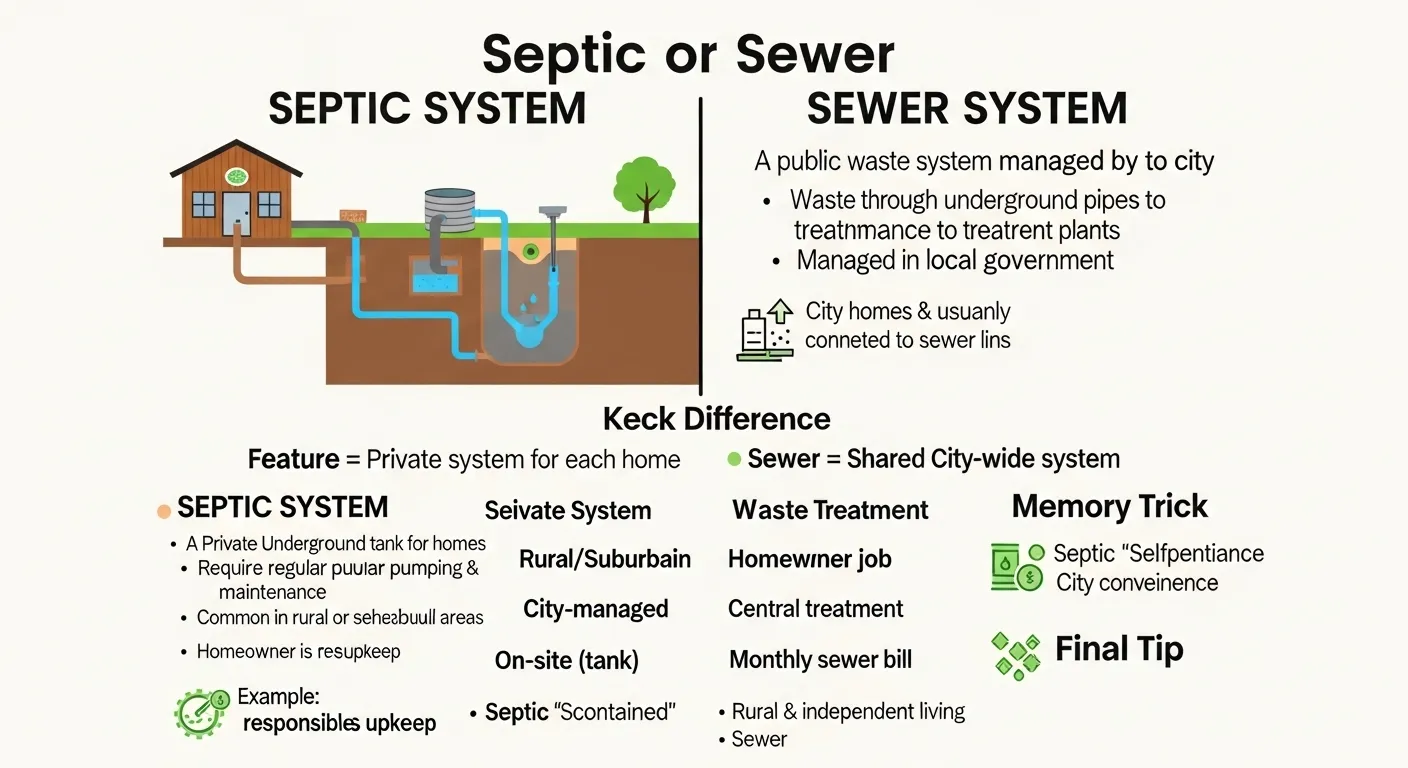
A septic system treats wastewater on your property, while a sewer system carries wastewater to a centralized treatment facility.
I remember visiting a rural home and hearing someone say, “We’re on septic, not sewer,” and I had no idea what that meant. It sounded technical, but it actually affects daily life more than most people realize.
Many homeowners search “septic or sewer” because the two systems handle waste differently, and choosing the right one can impact cost, maintenance, and convenience.
Once you understand how each system works, the difference becomes simple and practical.
Septic or Sewer : Quick Answer
Septic = a private underground system that treats wastewater on site
Sewer = a public system that carries wastewater away to a treatment plant
Examples:
- A farmhouse uses a septic system.
- A city apartment connects to a sewer system.
Simple rule:
Septic → private, on site treatment
Sewer → public, off site treatment
Meaning of Septic and Sewer
Both systems manage wastewater, but they operate in very different ways.
Septic (On Site Treatment)
A septic system is installed on private property and handles waste locally.
Key features:
- Underground tank
- Separates solids and liquids
- Treats wastewater naturally in soil
- Requires regular maintenance
Examples:
- Rural homes often rely on septic systems.
- Wastewater is filtered through a drain field.
Sewer (Centralized System)
A sewer system is a public network managed by local authorities.
Key features:
- Connected pipes across a city
- Carries waste to treatment plants
- No on site treatment needed
- Managed by municipality
Examples:
- Urban homes connect to sewer lines.
- Wastewater is treated at large facilities.
Origin of Septic or Sewer
- Septic systems developed for areas without public infrastructure.
- Sewer systems evolved in cities to manage large populations and improve sanitation.
Both systems were created to improve hygiene and public health.
Sewer vs Septic : Key Differences
| Feature | Septic | Sewer |
| Ownership | Private | Public |
| Location | On site | Off site |
| Maintenance | Homeowner | City authority |
| Cost | Lower monthly, higher upkeep | Monthly bill |
| Setup | Requires land | Requires connection |
Septic or Sewer : How They Work
Septic System Process
- Waste enters the tank
- Solids settle at the bottom
- Liquids flow to drain field
- Soil filters the water
Sewer System Process
- Waste enters pipes
- Travels through city network
- Reaches treatment plant
- Cleaned and released safely
Which One Should You Choose?
Choose based on your location and lifestyle:
Choose septic if:
- You live in a rural area
- You want independence from city systems
- You have enough land
Sewer Choose if:
- You live in a city
- You prefer low maintenance
- You want convenience
Quick tip:
- Want control → Septic
- Want convenience → Sewer
Common Mistakes with Septic or Sewer
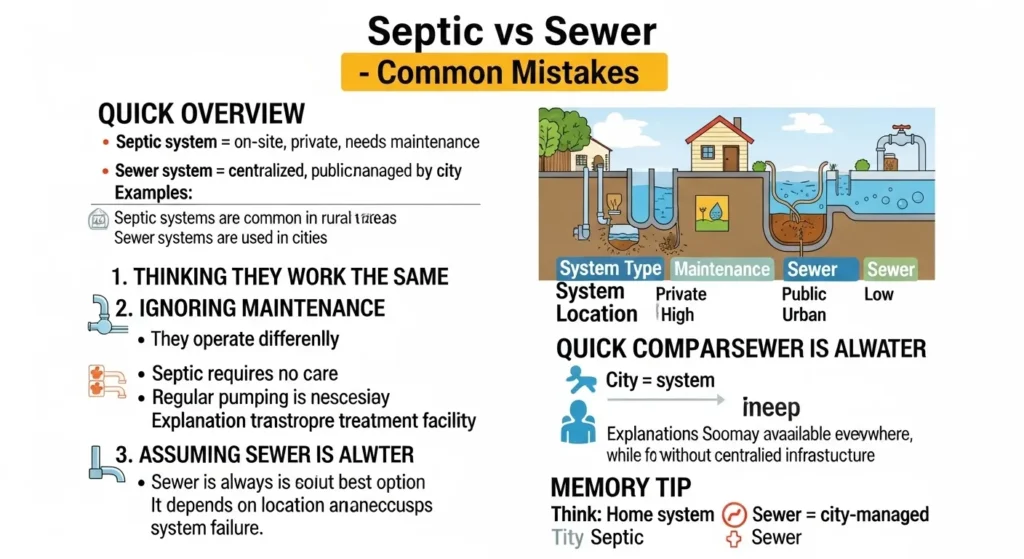
1. Thinking They Work the Same
❌ Both systems treat waste the same way
✅ They operate differently
2. Ignoring Maintenance
❌ Septic requires no care
✅ Regular pumping is necessary
3. Assuming Sewer Is Always Better
❌ Sewer is always the best option
✅ It depends on location and needs
Septic and Sewer in Everyday Life
For Homeowners
- Septic requires monitoring
- Sewer requires bill payments
Property Value
- Sewer connections can increase value
- Septic systems may limit buyers
For Environment
- Septic can be eco friendly if maintained
- Sewer reduces local contamination risk
For Repairs
- Septic repairs can be costly
- Sewer issues are handled by the city
Septic vs Sewer : Side by Side Comparison
| Feature | Septic | Sewer |
| Control | High | Low |
| Convenience | Moderate | High |
| Responsibility | Owner | Municipality |
| Reliability | Depends on care | Generally consistent |
Sewer or Septic : Usage Insight
Why people compare them:
- Buying a home
- Understanding costs
- Maintenance concerns
General pattern:
- Septic → rural and independent living
- Sewer → urban and convenient living
Important note:
Your location often decides the system.
Frequently Asked Questions
1. What is the main difference between septic and sewer?
Septic treats waste on site, while sewer sends it to a treatment plant.
2. Which is better, septic or sewer?
It depends on your location and lifestyle.
3. Is septic more expensive?
Maintenance can cost more over time.
4. Does sewer require maintenance?
No, the city manages it.
5. Can I switch from septic to sewer?
Sometimes, if sewer lines are available.
6. Which is more eco friendly?
Both can be eco friendly if properly managed.
7. Which is easier to manage?
Sewer is easier for most homeowners.
Conclusion
Understanding the difference between septic and sewer systems is important when choosing or managing a home.
A septic system is a private setup that treats wastewater on your property, offering independence but requiring regular maintenance and responsibility. It is commonly used in rural areas where public systems are not available.
On the other hand, a sewer system is a public network that carries wastewater away to a treatment facility, making it more convenient and easier to manage for homeowners.
It is widely used in urban areas. Each system has its advantages and drawbacks, and the best choice depends on your location, budget, and lifestyle.
By understanding how both systems work, you can make a more informed decision and avoid unexpected problems in the future.
Discover More Articles:

