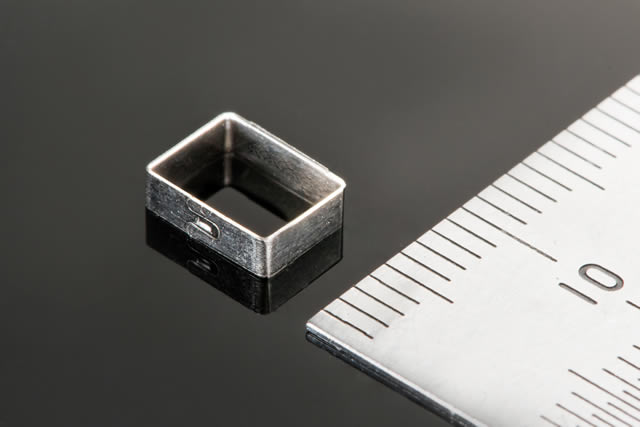
Let me be straight with you—nickel alloy stampings are not for the faint of heart. If you’ve ever worked with standard steel stampings, you know they can be challenging enough. But nickel alloys? They’re a completely different beast. I’ve seen seasoned toolmakers throw up their hands in frustration when their first attempt at stamping Inconel ended with broken punches, scratched parts, and a lot of colorful language.
Here’s the thing about nickel alloys that most catalog descriptions won’t tell you: they work-harden like crazy. Unlike ordinary steel that gets softer and more pliable as you work it, nickel alloys get harder and more brittle with every pass through the press. It’s like trying to bend a piece of metal that keeps fighting back, getting stronger the more you push it. This isn’t just an inconvenience—it’s the reason why tooling that works beautifully for stainless steel can fail catastrophically on its first run with Inconel.
The Real Cost of Doing It Wrong
I’ve watched companies try to cut corners by using standard tooling for nickel alloy jobs. It never ends well. The tooling wears out in a fraction of its expected life, parts come out with poor edge quality, and the scrap rate goes through the roof. One shop I visited had a rejection rate of over 30 percent on their first nickel alloy project. They thought they were saving money by avoiding specialized tooling. They ended up spending three times their original budget on rework and replacement tools.
Here’s what experience has taught me: successful nickel alloy stamping requires tooling made from premium materials with specific surface treatments. You can’t just grab any tool steel off the shelf and expect it to hold up. The tooling needs to be harder, more wear-resistant, and more carefully maintained than anything you’d use for standard materials. And the press speeds? You need to slow down. Way down. These alloys don’t like being rushed.
The Materials That Actually Work
Not all nickel alloys are created equal, and choosing the wrong one for your application can be an expensive mistake. Inconel 625 is the go-to for applications involving corrosive substances—think chemical processing equipment, marine components, and anything that comes into contact with seawater or acids. It’s tough, it resists corrosion like nothing else, and it holds up under extreme conditions. But it’s also a nightmare to stamp. The work-hardening is aggressive, and you need to plan your tooling and process accordingly.
Inconel 718, on the other hand, is what you want when strength at high temperatures is the priority. It maintains its mechanical properties even when things get really hot—we’re talking temperatures that would turn ordinary steel into a molten mess. This is the alloy you find in jet engines, turbine blades, and any application where heat is the enemy. The titanium and aluminum in the alloy give it that incredible high-temperature strength, but they also make it more challenging to stamp consistently.
Then there’s Kovar. This one is a different story altogether. It’s an iron-nickel-cobalt alloy that’s designed to have a thermal expansion coefficient that matches borosilicate glass. If you’re working in electronics, you probably know exactly what I’m talking about. Kovar is used for hermetic seals, where you need the metal and glass to expand and contract at the same rate to maintain a perfect vacuum seal. The problem is, Kovar is not cheap, and it’s not easy to work with. The tolerances are tight—we’re talking tenths of a millimeter—and any deviation in the stamping process can ruin the thermal match and scrap the entire part.
What Makes a Good Supplier
Finding a supplier who can actually deliver quality nickel alloy stampings is harder than it should be. A lot of shops claim they can handle these materials, but when you actually show them the drawing, they start backpedaling. The real difference-makers are the shops that understand the material properties intimately, not just the ones with the right machines.
A good supplier will talk to you about the specific challenges of your application. They’ll ask about the operating temperature, the chemical exposure, and the tolerances. They won’t just nod and say “we can do that.” They’ll explain how they plan to approach the tooling, what kind of press they’ll use, and how they’ll manage the work-hardening. They’ll also be honest about lead times—because stamping nickel alloys takes longer, and anyone who tells you otherwise is probably setting you up for disappointment.
The Bottom Line
Nickel alloy stampings are expensive, difficult to produce, and absolutely essential for certain applications. You can’t avoid them if you’re working in aerospace, medical devices, or chemical processing. But you can make smarter choices about who you work with and how you approach the project.
The best advice I can give is this: plan for the tooling cost, plan for the longer lead times, and don’t try to cut corners on material selection or processing speed. Nickel alloys reward patience and punish shortcuts. If you respect the material and work with a supplier who actually understands it, you’ll get parts that last decades instead of months. If you try to treat it like ordinary steel, you’ll end up with expensive scrap and a lot of regrets.
I’ve seen it play out both ways more times than I can count. The companies that succeed with nickel alloy stampings are the ones that take the time to understand what they’re working with and build relationships with suppliers who share that understanding. The ones that don’t usually end up learning the hard way—and in this business, learning the hard way costs real money.

